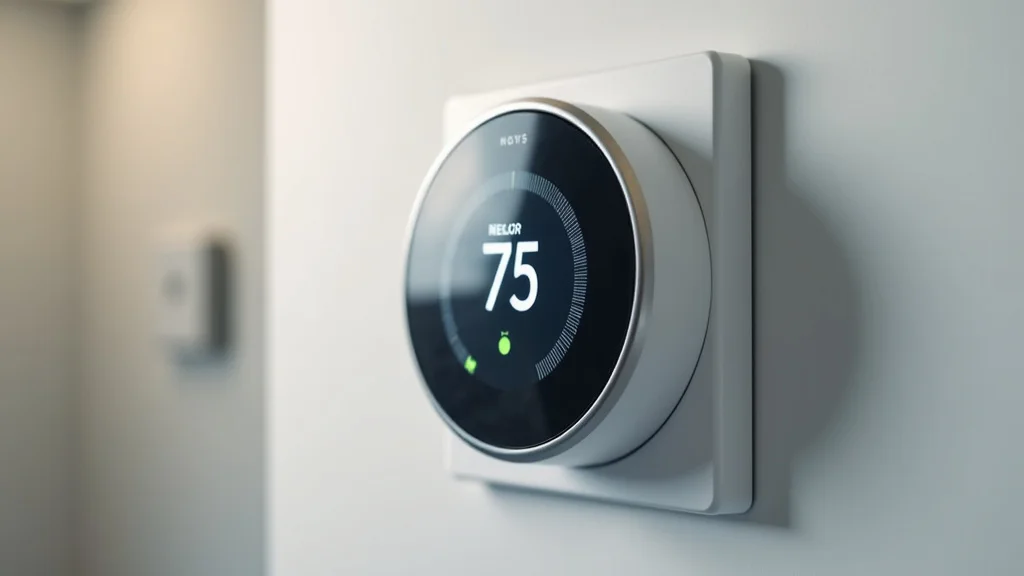
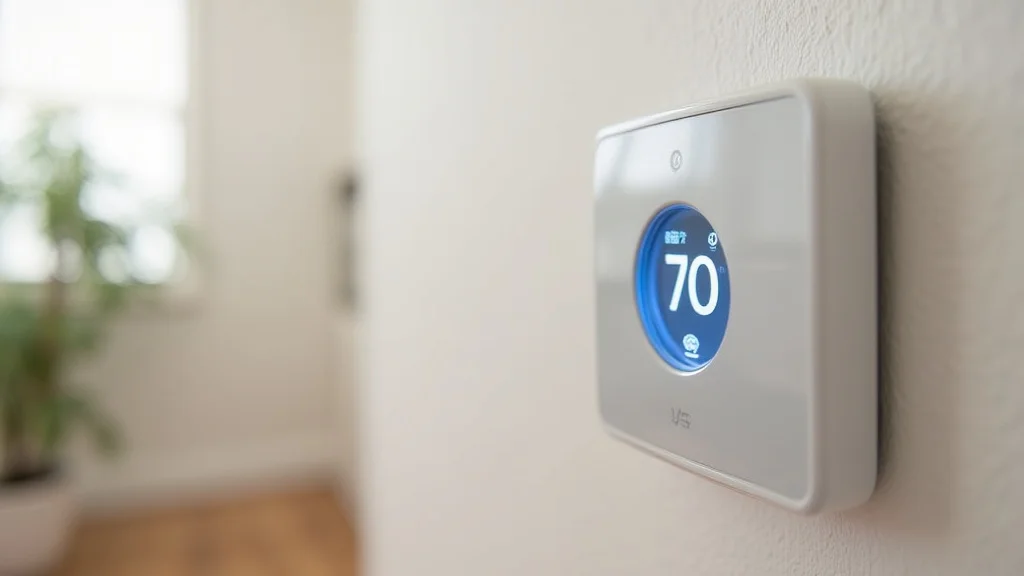
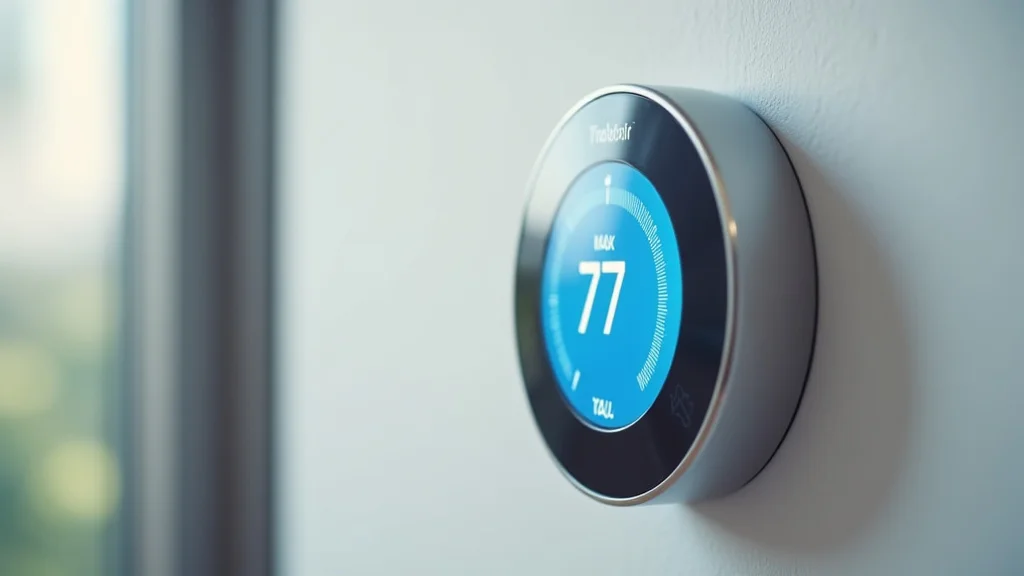
Picture this: you’re coming home after a long day, and the house is already the perfect temperature. Or, you’re on vacation, and you can easily adjust your home’s settings to save energy. This is the reality of using smart thermostats for home. These devices are changing how we manage our home’s climate. In this post, we’ll explore everything you need to know about smart thermostats, from their basic functions to advanced features, and how they can revolutionize your living space. You’ll gain valuable insights that will help you choose the best thermostat for your needs, ultimately leading to greater comfort, convenience, and potential energy savings.
Key Takeaways
- Smart thermostats offer remote control, allowing you to manage your home’s temperature from anywhere.
- These devices learn your habits and preferences to automate temperature adjustments, saving energy.
- Integration with other smart home devices enhances the overall functionality and control.
- Installation is often straightforward, and many models are compatible with existing HVAC systems.
- Smart thermostats can provide detailed energy usage reports, helping you monitor and reduce costs.
- These devices can improve comfort by maintaining consistent temperatures and personalized settings.
Unlocking Home Comfort with Smart Thermostats
Smart thermostats represent a significant shift in how we control our indoor environments. They go beyond simple temperature regulation, offering a suite of features that enhance comfort, convenience, and energy efficiency. These devices connect to your home’s Wi-Fi network, allowing you to control them remotely using a smartphone, tablet, or computer. They also often integrate with other smart home systems, creating a seamless and integrated experience. From learning your schedule to adjusting to weather changes, smart thermostats provide a more proactive and personalized approach to climate control. This leads to a home that is always comfortable and efficient.
The Core Functions of a Smart Thermostat
At their core, smart thermostats for home are designed to regulate temperature. However, they accomplish this task with far more sophistication than traditional thermostats. They use sensors to measure the current temperature and compare it to your setpoint. Based on this comparison, they control your home’s heating, ventilation, and air conditioning (HVAC) system to maintain the desired temperature. The core function encompasses automated scheduling, learning capabilities, and remote access, offering a more efficient and user-friendly experience.
- Temperature Sensing and Control: A smart thermostat’s primary function is to accurately measure and regulate the temperature of your home. They have built-in temperature sensors that constantly monitor the environment. When the temperature deviates from your setpoint, the thermostat signals your HVAC system to turn on or off, adjusting the heating or cooling as needed. This ensures a consistent and comfortable temperature throughout your home. This level of precise control is far superior to traditional thermostats that often provide less accurate temperature readings.
- Automated Scheduling: One of the most significant advantages of a smart thermostat is its ability to create and adhere to automated schedules. You can set different temperatures for different times of the day and different days of the week, helping to conserve energy when you are away or asleep. Some thermostats even let you use a geo-fencing feature to automatically adjust the temperature based on your proximity to your home. This means the system can begin heating or cooling your house as you approach, ensuring optimal comfort upon your arrival.
- Learning and Adaptation: Many smart thermostats have a learning feature. They observe your usage patterns and preferences over time, automatically adjusting the temperature to optimize comfort and energy savings. They learn your preferred temperatures at different times of the day, as well as how long it takes your home to heat or cool. This self-learning capability eliminates the need for manual programming and allows the thermostat to adapt to your lifestyle seamlessly.
- Remote Access and Control: Smart thermostats provide remote access via a smartphone app or web interface. This allows you to monitor and control your home’s temperature from anywhere with an internet connection. You can make adjustments to the temperature settings, view energy usage data, and receive alerts about the system’s performance. This level of convenience offers peace of mind.
The core technology involves using thermistors to accurately measure temperatures. These are highly sensitive electronic components whose resistance changes with temperature. This allows the thermostat to continuously monitor the temperature and make precise adjustments. Some models incorporate multiple sensors throughout the house, or can use sensors of other compatible devices to improve this function, creating a more uniform temperature distribution.
To implement automated scheduling, most smart thermostats use a digital clock and memory to store your programmed settings. This allows them to precisely regulate your home’s temperature throughout the day and week, helping to reduce energy consumption and lower utility bills. Advanced models may feature holiday settings, automatically adjusting the schedule during specific times.
The learning feature is typically implemented using machine learning algorithms. The thermostat’s software analyzes your settings, learns your routines, and makes adjustments without your involvement. It considers various factors, including the time of day, day of the week, and your presence in the home. This provides a truly personalized and energy-efficient climate control experience.
This functionality is achieved by connecting the thermostat to your home’s Wi-Fi network. The thermostat communicates with a cloud server. Your smartphone app also connects to the same cloud server, allowing you to send commands and receive real-time data from your thermostat. This system lets you make changes even when you are far away from your home.
Features and Benefits: Smart Thermostat Advantage
The benefits of a smart thermostat extend beyond basic temperature control. These devices offer features that promote energy savings, improve comfort, and integrate with a broader smart home ecosystem. They also contribute to a more convenient and efficient way of managing your home’s climate. The advanced features and benefits offered by these systems are driving their increasing popularity.
Energy Efficiency and Cost Savings
One of the primary advantages of smart thermostats for home is their potential to reduce energy consumption and lower utility bills. By optimizing temperature settings based on your schedule and preferences, smart thermostats prevent unnecessary heating or cooling when the home is unoccupied. Many models provide detailed energy usage reports, allowing you to monitor and understand your energy consumption patterns. Using the data, you can make informed decisions to further optimize your energy usage.
- Programmable Schedules: The ability to set custom schedules is key to saving energy. You can set different temperatures for different times of the day, ensuring the temperature is lower when you’re asleep or away. Smart thermostats enable precise control, allowing you to avoid wasting energy by heating or cooling an empty house. For example, you can program the temperature to drop in the evening and increase shortly before your wake-up time.
- Learning Capabilities and Optimization: The learning capabilities of these devices are a major energy-saving benefit. They learn your usage patterns and automatically adjust the temperature to optimize comfort and energy efficiency. Over time, the thermostat adapts to your lifestyle, avoiding unnecessary temperature adjustments and reducing energy waste. This self-learning feature eliminates the need for constant manual adjustments and ensures the system operates at peak efficiency.
- Geo-Fencing Technology: Geo-fencing is a helpful feature in saving energy. The thermostat can detect your location using your smartphone’s GPS. As you move closer to home, the system automatically starts heating or cooling your house. It ensures the home is comfortable upon your arrival, while minimizing energy use when you are away.
- Energy Usage Reporting and Insights: Smart thermostats often provide detailed reports on your energy consumption. These reports offer insights into how much energy you are using, and when. You can view your energy usage over time, compare it to previous periods, and identify potential areas for improvement. This information helps you make informed decisions about your energy usage.
The process of creating a schedule is typically user-friendly, done through a smartphone app or the thermostat’s interface. You can set different temperatures for weekdays and weekends, or even for specific days of the week. Many models also offer pre-set schedules, such as “Away,” “Sleep,” and “Home,” to simplify the process.
Machine learning algorithms are the brains behind this optimization. They analyze your thermostat settings, as well as the heating and cooling behavior of your home. They use this data to predict your future energy needs, and proactively adjust settings to minimize energy consumption while still maintaining comfortable temperatures.
The geo-fencing feature works by creating a virtual perimeter around your home. When your smartphone enters this perimeter, the thermostat receives a signal to activate the HVAC system. You can customize the size of the perimeter, and the thermostat will use this information to calculate the optimal time to start heating or cooling your home.
The energy usage data is often presented in a user-friendly format, such as graphs and charts. You can see how your energy consumption changes depending on the time of day, day of the week, and season. You can also analyze how your thermostat settings affect your energy usage, helping you to make adjustments that save money.
Enhanced Comfort and Convenience
Beyond energy savings, smart thermostats enhance your comfort. They ensure consistent temperature maintenance and provide personalized settings. Their remote access and automation features make managing your home’s climate effortless. These devices eliminate manual adjustments, and offer a more personalized and comfortable living environment.
- Consistent Temperature Control: Smart thermostats regulate the temperature in your home with greater precision than traditional models. They maintain a consistent temperature, eliminating temperature fluctuations and providing a more comfortable living environment. They have accurate sensors and precise control algorithms that ensure the temperature stays within your desired range.
- Personalized Comfort Settings: Smart thermostats allow you to customize your home’s climate to your preferences. You can set different temperatures for different rooms, create custom schedules that match your lifestyle, and adjust settings based on your daily routine. The personalized comfort settings create a more enjoyable and comfortable living environment.
- Remote Access and Control: The remote access feature lets you control your thermostat from anywhere with an internet connection. You can adjust the temperature, change the schedule, and monitor energy usage from your smartphone, tablet, or computer. This feature provides flexibility and convenience, letting you maintain the comfort of your home.
- Integration with Smart Home Systems: Smart thermostats seamlessly integrate with other smart home devices and systems, such as smart speakers, lighting, and security systems. This integration creates a more connected and automated home experience. This lets you control multiple devices with voice commands, or set up automated routines.
The thermostats use a combination of temperature sensors and advanced control algorithms to achieve consistent temperature control. These algorithms constantly monitor the temperature and make real-time adjustments to maintain the setpoint. Some models also use sensors in multiple rooms to make sure the temperature is consistent throughout your home.
Many thermostats offer features like multi-zone control, which lets you set different temperatures in different areas of your home. You can also create customized heating and cooling schedules, taking into account the time of day and the day of the week. Some models let you integrate with other smart home devices to create scenes, such as automatically adjusting the temperature when you are watching TV.
To use remote access, you typically need to download a mobile app and connect your thermostat to your home’s Wi-Fi network. From the app, you can view your thermostat’s current settings, change the temperature, and set up schedules. Some apps also let you receive notifications about your thermostat’s performance, such as alerts if the temperature in your home gets too hot or too cold.
Integration is typically accomplished through protocols like Wi-Fi or Z-Wave, which allow different devices to communicate with each other. For example, you can set up a routine to have your smart thermostat adjust the temperature when you turn on your smart lights, or to automatically lower the temperature when you arm your security system. Smart thermostats typically work with Amazon Alexa, Google Assistant, and Apple HomeKit.
Ease of Installation and Compatibility
The installation of a smart thermostat for home is generally straightforward. Most models are designed to be a direct
- Simple Replacement Process: Installing a smart thermostat involves removing your old thermostat and wiring the new one in its place. Most smart thermostats are designed to be a direct replacement for existing thermostats. They use the same wiring connections, which makes the installation process relatively easy.
- Compatibility with HVAC Systems: Smart thermostats are designed to be compatible with a wide range of HVAC systems, including furnaces, air conditioners, heat pumps, and dual-fuel systems. You should verify that the smart thermostat you choose is compatible with your specific system. Check the product specifications, or contact the manufacturer to confirm compatibility before purchasing.
- Step-by-Step Installation Guides and Support: Most smart thermostat manufacturers offer step-by-step installation guides and online resources. These resources include detailed instructions, diagrams, and videos that guide you through the installation process. You can also consult the manufacturer’s website.
- Integration with Other Smart Home Devices: Most smart thermostats seamlessly integrate with other smart home devices, such as smart speakers, lighting, and security systems. This integration creates a more connected home experience. This lets you control multiple devices with voice commands, or set up automated routines.
The installation process typically involves a few simple steps, such as turning off the power to your HVAC system, removing the faceplate of your old thermostat, and disconnecting the wires. You then connect the wires to the corresponding terminals on the new thermostat. Many thermostats include a wiring guide, and there are many installation tutorials online.
The compatibility of a smart thermostat depends on the wiring configuration of your HVAC system. Most thermostats are designed to work with both low-voltage and high-voltage systems. Common wiring configurations include single-stage, two-stage, and multi-stage systems. A few models are designed to be compatible with advanced features, such as zoning systems and smart vents.
Online support is typically available through the manufacturer’s website, and includes FAQs, troubleshooting guides, and contact information for technical support. In addition, many online communities provide support and troubleshooting assistance for smart thermostats. You may also consult with a professional HVAC technician.
Integration is typically accomplished through protocols like Wi-Fi or Z-Wave, which allow different devices to communicate with each other. For example, you can set up a routine to have your smart thermostat adjust the temperature when you turn on your smart lights, or to automatically lower the temperature when you arm your security system. Smart thermostats typically work with Amazon Alexa, Google Assistant, and Apple HomeKit.
Common Myths Debunked
Myth 1: Smart Thermostats Are Difficult to Install
In reality, installing a smart thermostat for home is often a simple DIY project. Most models are designed to
Myth 2: Smart Thermostats Only Save Money in Specific Climates
Smart thermostats can provide energy savings in a variety of climates. While the amount of savings may vary based on the climate and usage patterns, the ability to control and automate temperature settings remains beneficial regardless of the location. These systems save energy by optimizing temperature settings when you are away or asleep. They can also use features like geo-fencing to adjust the temperature automatically, ensuring efficiency in diverse climatic conditions.
Myth 3: Smart Thermostats Are Vulnerable to Cyberattacks
While any connected device is potentially vulnerable, smart thermostat manufacturers prioritize security and implement various measures to protect user data and privacy. They use encryption, secure protocols, and regular software updates to minimize risks. Homeowners can also take steps, like using strong passwords, to improve the security of their devices and networks.
Myth 4: Smart Thermostats Are Only for Tech-Savvy Individuals
Smart thermostats are designed to be user-friendly, catering to a wide range of users, regardless of their technical expertise. The installation and setup processes are designed to be simple, and the apps are easy to navigate. The learning capabilities of the thermostat allow it to adapt to your preferences. Many models provide customer support and detailed manuals to help users.
Myth 5: Smart Thermostats Only Work with Modern HVAC Systems
Most smart thermostats are designed to be compatible with a wide range of HVAC systems. This includes older systems as well. While some models may offer advanced features that are only compatible with newer systems, the basic functionality of a smart thermostat is often accessible regardless of the age of the equipment. Before purchasing, check the compatibility information, which is usually listed by the manufacturer.
Frequently Asked Questions
Question: What is a smart thermostat?
Answer: A smart thermostat is a Wi-Fi-enabled device that replaces a traditional thermostat. It offers remote control, automated scheduling, and learning capabilities to optimize your home’s temperature.
Question: Do I need a professional to install a smart thermostat?
Answer: Most smart thermostats are easy to install, following clear instructions. However, complex systems might need professional assistance.
Question: How much money can I save with a smart thermostat?
Answer: Savings vary, but smart thermostats can reduce energy bills through optimized schedules, and energy efficiency features, leading to annual savings.
Question: Are smart thermostats secure from hacking?
Answer: Manufacturers implement security measures, but users should use strong passwords and secure their home networks.
Question: What features are available for smart thermostats?
Answer: Features include remote control, automated scheduling, learning capabilities, energy monitoring, and integration with other smart home devices.
Final Thoughts
Smart thermostats for home offer a significant step forward in home climate control. They bring control and convenience. They help save energy. They offer features like remote access, learning capabilities, and seamless integration with other smart home systems. With their user-friendly design and straightforward installation, smart thermostats are accessible to anyone looking to improve the comfort and efficiency of their home. By embracing the capabilities of a smart thermostat, you can take charge of your home’s climate, save energy, and enhance your overall living experience. Explore the options and begin to design a more comfortable, efficient home environment.