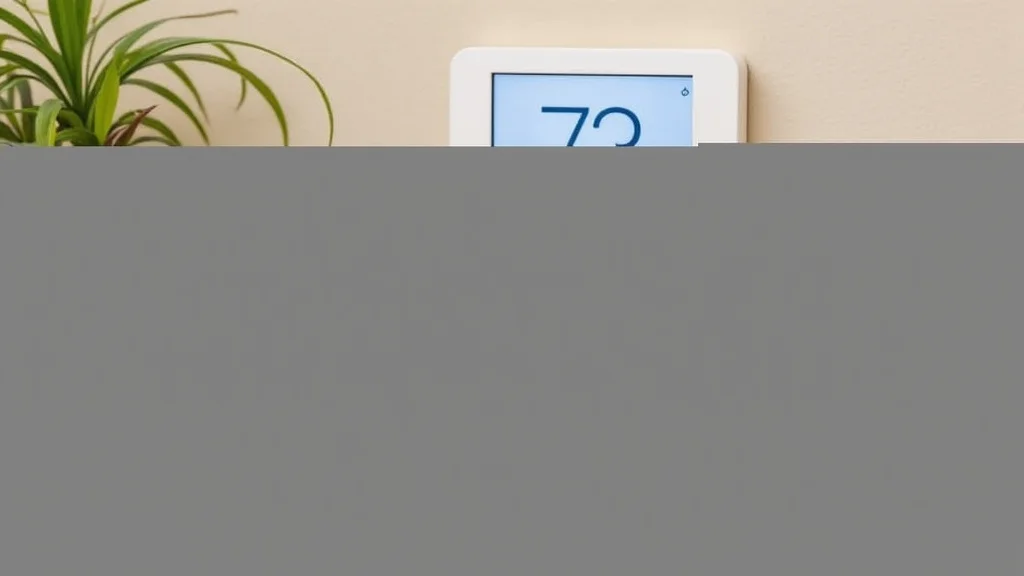
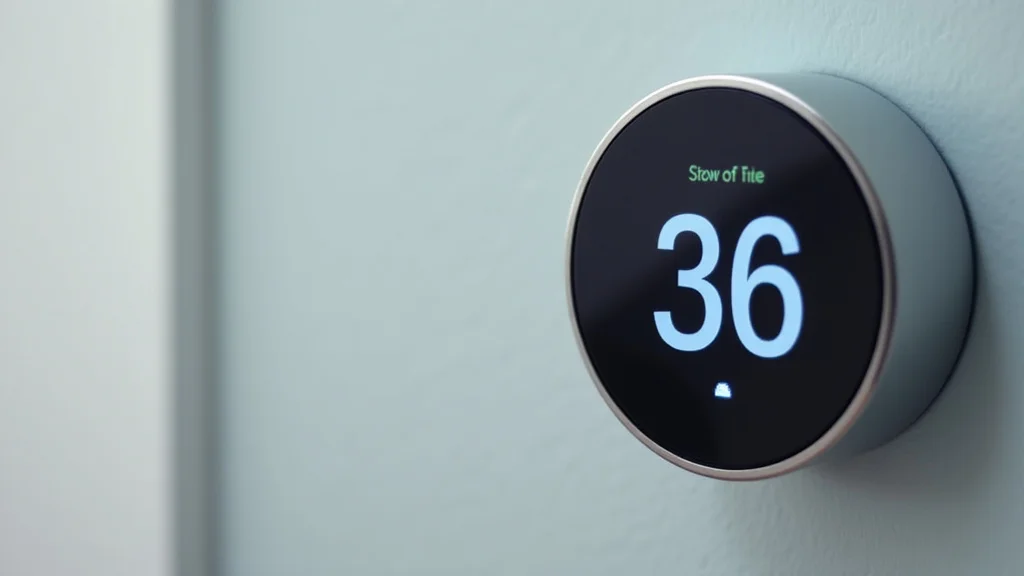
Picture this: It’s a scorching summer afternoon, and you’re stuck in traffic, already dreading the heat awaiting you at home. Wouldn’t it be amazing if your air conditioning could kick on automatically before you even arrive? Or, imagine you’re snuggled under a blanket on a winter evening and could easily adjust the temperature from your couch? This is where a z wave smart thermostat steps in, turning your home into a personalized comfort zone. In this post, we’ll explore everything you need to know about these innovative devices, helping you to make an informed decision and gain better control over your home’s climate. You’ll learn how they work, their benefits, and how to choose the right one for your needs.
Key Takeaways
- Discover the advantages of using a z wave smart thermostat for energy efficiency.
- Learn how these thermostats integrate with other smart home devices.
- Understand the ease of installation and setup.
- Explore advanced features such as remote access and scheduling.
- Find out how to choose the perfect model for your home.
- Explore tips to maximize the benefits of your smart thermostat.
Controlling Your Home Environment With Z Wave
The core function of a z wave smart thermostat is to regulate the temperature of your home, much like a traditional thermostat. However, unlike their simpler counterparts, smart thermostats use technology to enhance this basic function with connectivity and automation. Instead of manually adjusting the temperature on a physical dial, you can use your smartphone, tablet, or even voice commands to control your home’s heating and cooling systems. This convenience offers a far more dynamic and responsive control of your home’s climate.
How Z Wave Technology Works
Z Wave is a wireless communication protocol specifically created for home automation. It uses radio waves to allow devices to ‘talk’ to each other, creating a mesh network. This mesh network means each device acts as a relay, passing signals to others, significantly expanding the range and reliability of the system. This allows your thermostat to communicate with other devices, such as door locks, lights, and security systems. The communication is secure and uses a low-power, efficient design, reducing the strain on your home’s energy usage. Another major feature of Z Wave is its two-way communication; devices send confirmation that commands have been received and acted upon, increasing reliability.
- Z Wave operates on a specific radio frequency, usually around 908.42 MHz in North America, to avoid interference with Wi-Fi and other common devices.
- The mesh network design allows data to be routed around obstacles and through multiple devices, boosting range and reliability.
- Z Wave devices are designed for low power consumption, allowing for battery-powered devices to operate for extended periods.
- The protocol ensures secure communication with encryption and authentication features to protect your data and privacy.
- Interoperability is a hallmark of Z Wave, meaning devices from different manufacturers can work together seamlessly.
This technology also ensures that even if one device fails, the network can reroute signals, ensuring continuous operation. This makes the system more reliable. Z Wave smart thermostats integrate with your existing HVAC system and offer more complex scheduling and energy-saving features.
Benefits of a Z Wave Thermostat
Investing in a z wave smart thermostat provides several advantages. First and foremost, you can control your home’s temperature from anywhere using a smartphone app or a web browser. This means you can adjust settings remotely, whether you’re at work, on vacation, or simply in another room. This remote access improves convenience. Smart thermostats frequently offer energy savings by learning your habits and adjusting temperatures accordingly. They can automatically turn down the heat or AC when you’re away, conserving energy and reducing your utility bills. Additionally, they often provide detailed energy usage reports, giving you insights into your consumption patterns, enabling informed decisions.
- Remote access allows for easy control of your home’s climate from any location.
- Energy savings through automated adjustments based on schedules and occupancy detection.
- Integration with other smart home systems, creating a cohesive and automated home environment.
- Personalized comfort by allowing you to create custom schedules for different days of the week.
- Detailed energy reports to help you understand and manage your energy consumption habits.
The ease of setting schedules ensures your home is always at the perfect temperature when you arrive. Smart thermostats often connect with other smart devices to work in synergy, automating your home further.
Selecting the Right Z Wave Thermostat
Choosing a z wave smart thermostat involves considering several features. Compatibility is crucial; ensure the thermostat works with your HVAC system and Z Wave hub or controller. Consider factors like the number of stages your HVAC system has. If you have multiple zones in your home, look for thermostats that support zoning capabilities. Design is another factor; do you want a sleek, modern look, or something more traditional? Consider the display size and ease of use of the interface, as you’ll be interacting with it frequently. Check for features like voice control compatibility (Alexa, Google Assistant, etc.) if that’s a necessity.
- Ensure the thermostat is compatible with your existing HVAC system (furnace, air conditioning, heat pump).
- Look for user-friendly interfaces, including touchscreen displays and intuitive mobile apps.
- Check for compatibility with other smart home devices and voice assistants.
- Consider the features that meet your specific needs, such as zoning and humidity control.
- Read reviews and compare specifications to find the best balance of features and cost.
Consider the cost of installation, as some models may require professional installation, while others are easy to install yourself. Research different models to find one that fits your budget and lifestyle.
Advanced Features and Integrations
Beyond basic temperature control, smart thermostats offer advanced features that enhance usability and energy savings. Geofencing is a helpful feature that uses your smartphone’s location to automatically adjust the temperature when you leave or return home. This can minimize energy waste when you’re away and ensure a comfortable environment upon your arrival. Smart learning thermostats analyze your usage patterns and preferences over time, automatically adjusting the temperature to optimize comfort and energy efficiency without requiring your constant input. Integration with other smart home systems opens up many possibilities.
Smart Home Integration
The ability to connect with other devices is a key advantage of a z wave smart thermostat. Through Z Wave technology, the thermostat can communicate with a variety of other smart home products, such as smart lights, door locks, and security systems. For instance, when the thermostat detects you’re away, it can trigger your smart lights to turn off and your security system to activate, ensuring energy savings and peace of mind. Integration also allows for voice control through assistants like Amazon Alexa, Google Assistant, and Apple HomeKit, providing even greater convenience.
- Integration with smart lighting systems to save energy and create personalized lighting scenes.
- Connectivity with smart security systems for automatic arming/disarming and temperature adjustments.
- Support for voice control through assistants like Amazon Alexa, Google Assistant, and Apple HomeKit.
- Integration with smart plugs to control appliances based on temperature settings.
- Compatibility with other smart home platforms like SmartThings and Home Assistant.
These integrations build a more convenient and efficient smart home setup. For example, if a smoke detector senses a fire, the thermostat can automatically shut off the HVAC system to stop the spread of smoke.
Energy Efficiency Features
One of the primary goals of a smart thermostat is to save energy. These thermostats come with many features designed to minimize energy use while keeping your home comfortable. One of the best is the scheduling function, which allows you to program temperature settings for different times of the day and different days of the week, optimizing efficiency. Many thermostats use geofencing, automatically adjusting the temperature based on your location; they can lower the heat or AC when you leave and raise it again before you return. Some units have “smart learning” capabilities that analyze your habits and then adapt to your schedules.
- Smart scheduling allows you to create customized heating and cooling programs.
- Geofencing utilizes your phone’s location to automatically adjust temperatures.
- Smart learning capabilities analyze and adapt to your usage patterns over time.
- Energy usage reports help you monitor and track your energy consumption.
- Holiday mode allows you to set energy-saving schedules for extended absences.
These features enable significant savings on your utility bills over time, frequently paying for the initial investment in the thermostat.
Installation and Setup Made Simple
One of the best features of z wave smart thermostat units is the ease of installation, offering a straightforward process even for those new to smart home technology. The first step involves removing your existing thermostat, a process that usually requires just a screwdriver and some basic knowledge. Take a picture of your old thermostat’s wiring before disconnecting any wires; this is a helpful reference. Next, attach the wires to the corresponding terminals on the new thermostat, following the instructions provided in the installation guide. Finally, connect your new thermostat to your Z Wave hub, which usually involves entering a code or pressing a button to pair the devices. Then you can fine-tune the settings and establish custom schedules.
Step-by-Step Installation Guide
- Turn off the power to your HVAC system at the circuit breaker.
- Remove your old thermostat from the wall, noting the wiring configuration.
- Detach the wires from the old thermostat, labeling them if needed.
- Mount the base of your new z wave smart thermostat on the wall.
- Connect the wires to the corresponding terminals on the new unit, following the wiring diagram.
- Attach the thermostat faceplate to the base and turn the power back on.
- Connect your thermostat to your Z Wave hub via the pairing process.
- Test the thermostat to confirm proper operation, adjusting settings as needed.
The exact steps may vary depending on the model, but these steps offer a good overview. Always consult the manufacturer’s manual for specific instructions.
Troubleshooting Common Issues
While installing and using a smart thermostat is generally easy, you may encounter some issues. One of the most common is wiring problems; ensure all wires are securely connected to the correct terminals. Connectivity issues can sometimes arise; make sure your thermostat is within range of your Z Wave hub and that the hub is functioning correctly. If you’re experiencing temperature inaccuracies, calibrate your thermostat using the settings in the app or on the device itself. You can find many guides online that cover the typical problems and their fixes.
- Wiring errors: Double-check all wire connections against the wiring diagram.
- Connectivity problems: Ensure your thermostat is within range of your Z Wave hub.
- Temperature inaccuracies: Calibrate the thermostat using its settings.
- Programming problems: Verify that your schedule is set up correctly.
- App issues: Restart the app or consult the manufacturer’s support resources.
In addition, ensure that your hub is compatible with the thermostat and other devices you want to control. If problems continue, contact the manufacturer’s customer service or consult an HVAC professional.
Maximizing Your Z Wave Thermostat Benefits
Getting the most out of your z wave smart thermostat goes beyond basic setup; it involves utilizing all its features for maximum comfort and savings. Start by creating a detailed schedule that reflects your daily routine. Set different temperature settings for weekdays, weekends, and holidays. Enable geofencing so your thermostat adjusts based on your location. Examine the energy usage reports provided by your thermostat to identify areas for improvement. By fine-tuning your settings and utilizing all features, you can enjoy a more comfortable, energy-efficient home environment.
Optimizing Schedules and Settings
Creating personalized schedules and properly setting your thermostat are crucial for maximizing benefits. Consider your daily routine: when are you usually home, and when are you away? Set higher or lower temperatures when you’re away and adjust them before you return. Don’t be afraid to experiment with different settings to see what works best for your comfort and energy savings. Regularly review your schedules, especially as your routine changes, and make adjustments. The goal is to balance comfort with efficiency.
- Create schedules that reflect your daily and weekly routines.
- Set different temperature settings for different times of the day.
- Use geofencing to allow your thermostat to adjust based on your location.
- Regularly review and adjust your settings as needed.
- Experiment with different settings to find the right balance of comfort and savings.
By regularly reviewing and adjusting your thermostat’s settings, you’ll be able to get the best performance from your system.
Integrating With Other Smart Home Devices
The ability of your z wave smart thermostat to connect with other devices adds significantly to its benefits. By integrating with other smart home systems, you can create a truly automated home experience. Pair your thermostat with smart lights, door locks, and security systems to create personalized scenarios that improve comfort, safety, and energy efficiency. For example, when you set your thermostat to “away” mode, it can also turn off your lights and lock your doors. Experiment with different integrations and scenes to find the perfect setup for your lifestyle.
- Integrate with smart lighting systems to save energy and create personalized lighting scenes.
- Connect with smart security systems for added safety and convenience.
- Use voice assistants such as Alexa or Google Assistant.
- Set up “scenes” to automate multiple devices with a single command.
- Explore other integrations like smart blinds and thermostats to further automate your home.
This will allow you to control your home’s climate more conveniently. These integrations will make your smart home more responsive to your needs.
Common Myths Debunked
Myth 1: Smart thermostats are too difficult to install and use.
Many people believe that smart thermostats are difficult to set up and use, assuming they require advanced technical skills. In reality, most units are designed for straightforward DIY installation, with clear instructions and intuitive interfaces. Modern designs provide simple interfaces and easy-to-use mobile apps.
Myth 2: Smart thermostats are only for tech-savvy individuals.
Another popular myth is that smart thermostats are only for those comfortable with technology. The truth is they’re designed for a broad audience. The main benefit is convenience, appealing to everyone seeking easier home climate management.
Myth 3: Smart thermostats don’t save any real money on energy bills.
Some doubt the ability of smart thermostats to significantly reduce energy costs. In practice, smart thermostats offer several energy-saving features, such as adaptive learning, and intelligent scheduling. Numerous studies have shown that smart thermostats can reduce energy bills, often covering the initial investment over time.
Myth 4: Smart thermostats are not secure and can be easily hacked.
Many are concerned about the security of smart home devices, including thermostats. Modern z wave smart thermostat systems use advanced encryption and security protocols to protect your data and prevent unauthorized access. Regular updates and secure networks safeguard the system.
Myth 5: Smart thermostats require professional installation.
While some older or complex HVAC systems may require professional help, most smart thermostats are easy to install, even for those with little technical experience. Detailed instructions and tutorials are typically available.
Frequently Asked Questions
Question: What is a Z Wave hub, and do I need one?
Answer: A Z Wave hub is a central device that connects your z wave smart thermostat and other Z Wave devices to your home network. You need a Z Wave hub for your smart thermostat to work properly.
Question: Can I control my thermostat remotely?
Answer: Yes, one of the key benefits is the ability to control your thermostat remotely using a smartphone app or a web browser.
Question: Will a smart thermostat work with my existing HVAC system?
Answer: Most smart thermostats are compatible with a wide range of HVAC systems, but it’s crucial to check compatibility before purchase.
Question: Does a smart thermostat require a Wi-Fi connection?
Answer: Yes, most z wave smart thermostat units require a Wi-Fi connection to connect to your home network and allow remote control.
Question: How secure is a smart thermostat?
Answer: Z wave smart thermostat systems utilize security protocols, including encryption, to protect your data.
Final Thoughts
Investing in a z wave smart thermostat can significantly improve the comfort and efficiency of your home. These devices offer convenience, energy savings, and integration with other smart home systems. With remote access, you can manage your home’s climate from anywhere. They learn your habits and adapt to your schedule, optimizing energy consumption. Installation is straightforward, and the benefits include energy savings, and a more comfortable living environment. Taking the time to explore and incorporate the advanced features such as geofencing and smart scheduling further enhances its value. By selecting a thermostat that meets your unique needs and making the most of its capabilities, you’ll be well on your way to a smart, energy-efficient home. Embrace the power of intelligent climate control, and experience the future of home comfort today.