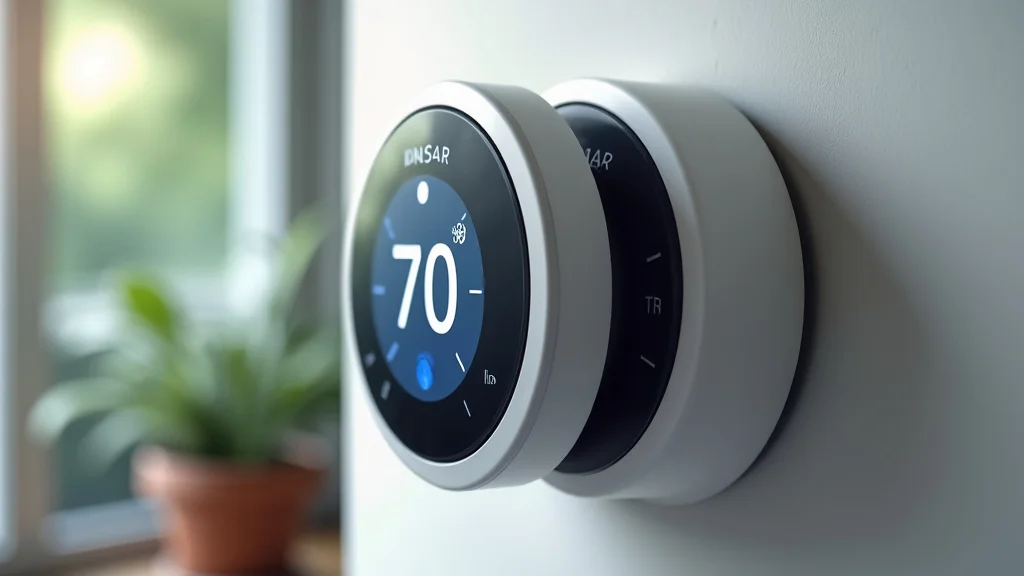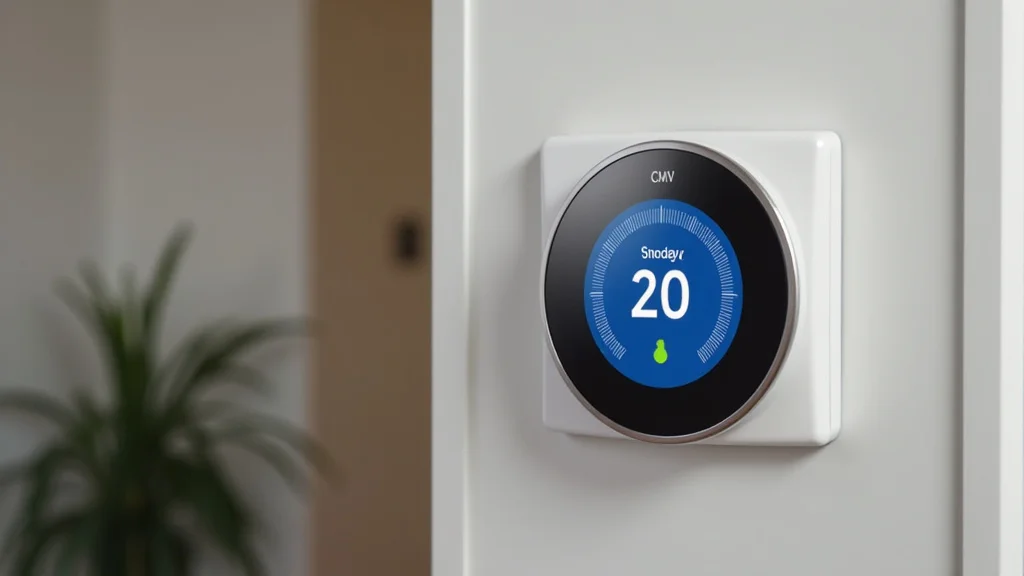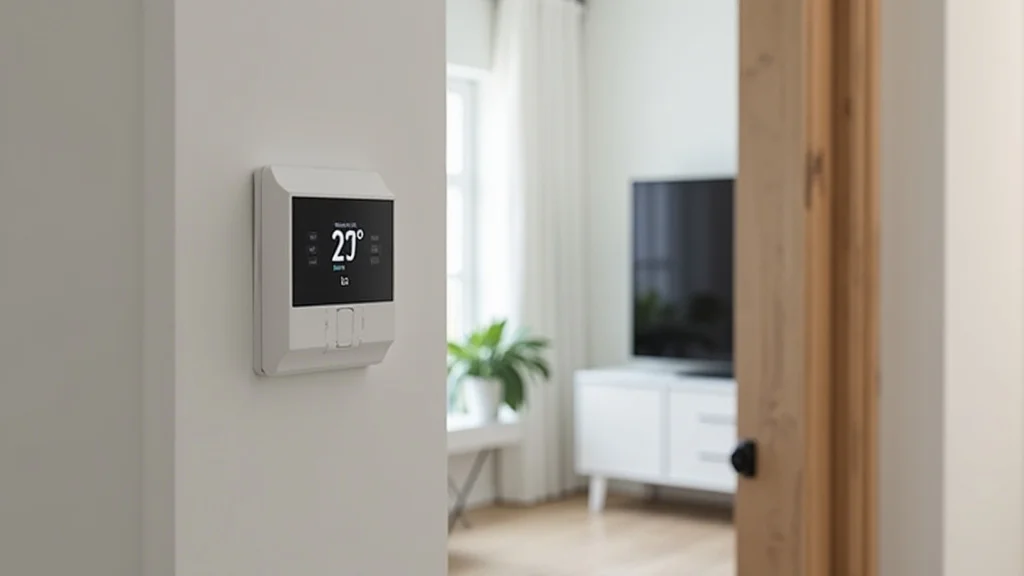
Picture this: It’s a freezing winter evening, and you’re miles from home. Wouldn’t it be great to warm up your house before you even walk through the door? Or maybe it’s a scorching summer day, and you want to cool things down before you arrive. This is where a smart thermostat HomeKit comes in handy. This guide explores the benefits and features of this technology, helping you transform your home into a more comfortable and efficient space. You’ll learn how these thermostats work, how to set them up, and how they can save you money. This guide aims to equip you with the knowledge to make an informed decision, ensuring your home is always at the perfect temperature. This post will improve your knowledge of smart thermostat HomeKit, increasing your home’s comfort and your energy savings.
Key Takeaways
- You will learn how a smart thermostat HomeKit integrates with Apple’s ecosystem.
- Discover the energy-saving features of these smart devices.
- Learn the process of installing and setting up a smart thermostat.
- Understand how to control your thermostat using Siri voice commands.
- Explore advanced features like geofencing and smart scheduling.
- Gain insight into selecting the right smart thermostat for your needs.
Embracing a Smarter Home with Smart Thermostat HomeKit
The journey towards a smarter home often starts with improving the core systems that ensure comfort. One of the most impactful upgrades is switching to a smart thermostat HomeKit. This technology moves beyond basic temperature control, integrating with your Apple ecosystem to offer a seamless experience. Imagine being able to adjust your home’s climate from your iPhone or Apple Watch, no matter where you are. This convenience isn’t just about remote control; it’s about optimizing your home’s energy use, creating schedules, and adapting to your lifestyle. This section will delve into the core functionalities of smart thermostats, providing a foundational background for exploring the more advanced aspects.
What is HomeKit and How Does It Relate?
HomeKit is Apple’s framework for integrating and controlling smart home accessories. It allows users to manage compatible devices like lights, locks, and, of course, thermostats, all from a single interface: the Home app. HomeKit focuses on security and privacy, offering end-to-end encryption for communication between your devices and your iPhone, iPad, or Apple Watch. This ensures that your home data is not accessible to anyone but you. Furthermore, HomeKit devices must meet specific standards to be certified, adding an extra layer of assurance for compatibility and reliability.
- Seamless Integration: HomeKit allows all compatible smart home devices to operate together, creating automated scenes and automations.
- Privacy and Security: HomeKit prioritizes your home data with end-to-end encryption.
- Easy Control: The Home app provides a simple interface to control all HomeKit-enabled devices.
- Voice Control: Siri allows you to control your devices with voice commands.
HomeKit serves as the control center for your smart home, providing a user-friendly interface to manage all your connected devices. By using HomeKit, a smart thermostat HomeKit seamlessly blends into your home’s smart ecosystem. This integration streamlines device control and enables advanced automation. Think of setting up a “Goodnight” scene where your thermostat adjusts the temperature, your lights dim, and your doors lock, all with a single voice command or tap.
Core Functions and Advantages
At its heart, a smart thermostat
- Remote Control: Manage your home’s temperature from anywhere via your smartphone.
- Scheduling: Create schedules that automatically adjust temperatures.
- Energy Monitoring: Track and analyze your energy consumption.
- Voice Control: Use Siri to control your thermostat hands-free.
The benefits of a smart thermostat extend beyond mere control. They offer a more efficient use of your home’s heating and cooling systems, potentially lowering your energy bills. Many smart thermostats also offer learning capabilities, adapting to your habits and preferences over time to further optimize energy usage. This intelligent adaptation ensures your home is comfortable when needed and minimizes energy waste when it’s not. The smart nature also facilitates integration with other smart home devices. For example, your thermostat can coordinate with your smart window sensors to conserve energy by automatically turning off the heating or cooling when a window is open.
Smart Features to Optimize Your Climate Control
Beyond the fundamental functions, smart thermostats offer advanced features that enhance your comfort. Geofencing is a notable example, using your phone’s location to automatically adjust the thermostat based on your proximity to your home. When you’re approaching, the system can begin preheating or precooling your home. Integration with other smart home systems, such as smart vents, allows for better air distribution in different rooms, and the ability to link with weather forecasts allows for automatic adjustments based on external conditions. These features showcase the true potential of a smart thermostat HomeKit.
Geofencing and Location-Based Automation
Geofencing is an important feature in smart thermostat HomeKit technology. It uses your smartphone’s location to create a virtual perimeter around your home. When you enter this designated area, the thermostat can automatically adjust the temperature to your preferred settings. Conversely, when you leave the area, the thermostat can lower or increase the temperature to save energy. This automation eliminates the need to manually adjust the thermostat, ensuring your home is comfortable when you are present and conserving energy when you are away. This technology saves you the effort of remembering to change settings. This level of automation significantly improves convenience while simultaneously optimizing energy consumption.
- Automatic Adjustment: Adjusts temperature based on your arrival and departure.
- Energy Saving: Prevents unnecessary heating or cooling when you are away.
- User Convenience: No manual adjustments required.
- Customizable Zones: Allows you to define geofencing areas.
Geofencing goes beyond simple temperature adjustments. It also allows for creating custom actions based on your location. You could set it to turn on lights when you approach your home after dark or to notify family members when you arrive. This feature is particularly useful for those with irregular schedules. Geofencing can learn and adapt to your patterns. The system monitors your behavior over time, fine-tuning its actions to meet your specific needs and preferences. This continuous learning enhances the efficiency and effectiveness of the geofencing system, providing a smarter and more convenient home automation experience.
Scheduling and Smart Learning
Smart thermostats come with advanced scheduling capabilities, allowing you to program temperature changes based on your daily or weekly routine. You can set different temperatures for mornings, evenings, and weekends, ensuring comfort when you are home and saving energy while you are away. Some models go further with smart learning features, observing your usage patterns and learning your preferences. These features analyze your habits, taking into consideration your preferred temperatures at different times and adjusting the thermostat automatically. These systems work without any manual adjustments.
- Programmable Schedules: Allows you to schedule temperature adjustments.
- Smart Learning: Learns your habits and automatically adjusts the temperature.
- Customizable Profiles: Supports the creation of multiple profiles.
- Adaptive to Changes: Automatically adjusts to changing routines.
Smart learning thermostats bring significant benefits. They remove the need for constant manual adjustments, providing hands-off temperature control. They also optimize your energy consumption, adapting to your lifestyle to save money. By observing your behavior over time, they anticipate your needs, such as setting the temperature higher before you wake up or lowering it when you are asleep. The continuous learning process results in increased comfort and efficiency. It can learn from unexpected events, such as a change in your work schedule or an out-of-town trip. By responding to changes, the system ensures your home remains comfortable and your energy usage is optimized.
Installation and Setup of Your HomeKit Thermostat
Installing a smart thermostat HomeKit can be a straightforward process, even for those with limited technical skills. The first step involves checking compatibility with your current HVAC system. Make sure the new thermostat works with your furnace, air conditioner, and wiring. During installation, you will remove your old thermostat and connect the wires from your HVAC system to the new thermostat, following the instructions provided in the product guide. After physical installation, you’ll use the Home app on your iPhone or iPad to connect the thermostat to your home network and integrate it with your Apple ecosystem. Careful execution ensures you take full advantage of its features.
Pre-Installation Checklist
Preparation is key to a smooth installation process. Before beginning the physical installation, there are a few things to consider. First, check the compatibility of your existing HVAC system to ensure that the smart thermostat HomeKit works with your furnace or air conditioner. Next, gather the necessary tools. This typically includes a screwdriver, wire strippers, and possibly a level. You will also need your smartphone or tablet to set up the thermostat in the Home app. Finally, make sure you have a stable Wi-Fi network. Doing this will allow for seamless integration and optimal performance. Completing this checklist before you start can minimize delays.
- HVAC Compatibility: Verify your HVAC system is compatible.
- Gather Tools: Gather a screwdriver, wire strippers, and a level.
- Home App Access: Ensure your iOS device is updated with the Home app.
- Network Access: Confirm a stable Wi-Fi connection.
Taking photos of your old thermostat’s wiring is highly recommended. This will act as a reference guide, ensuring you connect the wires of your new smart thermostat correctly. Another important step is to cut the power to your HVAC system at the breaker before removing the old thermostat. This prevents electrical shock and ensures the safety of your home during the installation process. Reviewing the thermostat’s installation manual before starting will familiarize you with the specific steps and precautions required. It is a good practice to double-check each wire connection before closing up the thermostat to ensure it is secure. Following these steps can help avoid issues.
The Installation Process
The installation of a smart thermostat HomeKit generally involves removing your old thermostat, attaching the wires to the new device, and setting up the device on your network. Begin by turning off the power to your HVAC system at the circuit breaker. Remove the faceplate of your old thermostat and take a photo of the wiring setup to use as a reference. Carefully disconnect the wires from the old thermostat, labeling each wire with its corresponding terminal letter. Attach the wires to the new smart thermostat, matching the wire labels to the terminals as shown in the installation manual. Once the wiring is complete, mount the new thermostat on the wall. After physical setup, download the Home app if you haven’t already.
- Turn Off Power: Cut the power at the circuit breaker.
- Remove Old Thermostat: Carefully remove and photograph the wiring.
- Wire Connection: Connect wires to the new thermostat according to the manual.
- Mount and Power Up: Mount the thermostat and restore the power.
Using the Home app, add the thermostat as a new accessory. The app will guide you through connecting it to your Wi-Fi network and configuring its settings. The process often involves scanning a HomeKit setup code, typically found on the thermostat itself. After the Home app configures the device, you can start setting up schedules, geofencing, and other smart features. The app provides a user-friendly interface. You can set custom temperature settings, create scenes for specific times of day or activities, and monitor your energy consumption. Testing the functionality of the thermostat is the last step. Check for proper heating and cooling operations.
Exploring the HomeKit Ecosystem and Siri Integration
The strength of a smart thermostat HomeKit extends beyond controlling temperature. Its true power comes from its integration with the broader HomeKit ecosystem. This integration enables you to create comprehensive smart home automations that coordinate your thermostat with other devices like lights, door locks, and window sensors. Through Siri, you can control your thermostat using voice commands. This integration delivers seamless control and customization.
Voice Control with Siri
Siri makes it easy to control your smart thermostat HomeKit hands-free. Simply speak commands to your iPhone, iPad, or HomePod to adjust the temperature. You can ask Siri to set the temperature to a specific value, raise or lower it by a certain degree, or activate a preset scene. Siri’s natural language processing allows you to use casual language. For example, you can say, “Hey Siri, make it warmer in here.” Or, “Hey Siri, set the thermostat to 72 degrees.” This ability to use intuitive speech makes the technology accessible to everyone. Voice control adds a layer of convenience to your smart home environment.
- Direct Control: Adjust the temperature using your voice.
- Scene Activation: Activate scenes that include thermostat settings.
- Intuitive Commands: Use casual language for control.
- Cross-Device Compatibility: Works with all HomeKit-compatible devices.
Voice control also allows you to manage multiple devices simultaneously. For example, you can say, “Hey Siri, turn on the living room lights and set the temperature to 70 degrees.” This allows for the creation of customized settings, tailoring your home to your preferences. The responsiveness and accuracy of Siri’s voice control continues to improve. Apple constantly updates its voice recognition technology to provide better interactions. This means the interaction will become more reliable and responsive. Siri provides more convenience and flexibility than traditional methods.
Automations and Scene Creation
One of the great features of HomeKit is its ability to create customized automations and scenes. Automations allow your devices to react automatically to specific events, such as time of day, your location, or the status of other devices. A scene is a pre-configured set of settings for multiple devices. For example, you can create a “Good Night” scene that lowers the temperature, dims the lights, and locks your doors with a single tap or voice command. This level of customization lets you optimize your smart thermostat HomeKit to fit your lifestyle.
- Automated Actions: Set up triggers for automated actions based on time, location, or device status.
- Scene Management: Create and activate predefined scenes for specific activities.
- Customized Settings: Configure unique settings that suit your lifestyle.
- Device Coordination: Coordinate thermostat settings with other HomeKit devices.
The ability to integrate your thermostat with other smart home devices increases the convenience of your HomeKit system. Automations can be as simple as setting your thermostat to lower the temperature when you leave home and raise it before you return. They can be more sophisticated, coordinating with smart window sensors to conserve energy. When the sensors detect an open window, they can automatically turn off your heating or cooling system. This integration allows you to fully customize your smart home experience. It makes your home respond to your routines and preferences.
Choosing the Right Smart Thermostat HomeKit
The smart thermostat HomeKit market offers a diverse range of options, each with unique features and advantages. To choose the right one, you should consider your home’s HVAC system compatibility, budget, and desired features. Look at the range of options and read reviews from other users. You can evaluate the performance of your system and energy-saving capabilities. You can find the best fit for your needs.
Key Features to Consider
Before purchasing a smart thermostat HomeKit, you should consider a few key features. Make sure the thermostat is compatible with your HVAC system and wiring. Consider the ease of installation and use, looking for user-friendly interfaces and clear instructions. Examine the energy-saving features, such as scheduling and geofencing. Also, check for features such as remote access, the ability to control it with voice commands, and the number of zones supported. Consider the design of the thermostat and how it will fit with your home’s aesthetic. Aesthetically pleasing devices can be just as important as the functional benefits.
- HVAC Compatibility: Make sure it is compatible with your system.
- Ease of Use: Look for user-friendly interfaces and clear instructions.
- Energy-Saving: Examine scheduling and geofencing features.
- Advanced Features: Consider voice control and multi-zone support.
Beyond these features, the long-term value of the smart thermostat is critical. Think about the energy savings. Consider the cost of the device compared to the potential savings on your energy bills. Also, factor in the thermostat’s software updates and customer support, ensuring you’re getting a device supported by regular updates and helpful customer service. Consider the added benefits. Some models provide insights into your energy consumption. Take your time to compare products, and assess your specific needs and preferences. By weighing these factors, you can make an informed choice. It will ensure the smart thermostat is a smart investment.
Top HomeKit Thermostat Recommendations
When selecting a smart thermostat HomeKit, researching top models is very important. Several thermostats stand out, each offering unique strengths. The Nest Learning Thermostat is a popular choice for its sleek design, smart learning capabilities, and integration with various platforms, though it isn’t fully HomeKit native. The Ecobee SmartThermostat with Voice Control is another great option, with a focus on energy saving and comprehensive features, including room sensors to monitor temperature in different areas of your home. The Honeywell Home T9 Smart Thermostat is known for its reliability, and it also features a user-friendly interface. Consider your needs as you examine these models.
- Nest Learning Thermostat: Popular for its learning capabilities.
- Ecobee SmartThermostat: Known for energy efficiency.
- Honeywell Home T9: Known for its reliability.
These recommendations offer a starting point for your research. The ideal choice depends on your specific needs and priorities. Consider your budget, home size, and the level of customization you need. Read reviews from other users to get insights into each thermostat’s performance and reliability. Look for models with solid customer support and software updates to ensure the device remains up-to-date and functions efficiently. You can find a smart thermostat that meets your needs. Take your time to compare the different products available. You can create a smart home experience.
Common Myths Debunked
Myth 1: Smart Thermostats Are Difficult to Set Up
Many believe that installing a smart thermostat HomeKit is complicated and requires professional help. The truth is, most are designed for easy installation, with detailed instructions and intuitive interfaces. Installation involves some basic wiring, similar to replacing a standard thermostat. Most manufacturers provide step-by-step guides, making the process straightforward for anyone comfortable with basic DIY tasks. Additionally, the Home app offers a streamlined setup process, guiding you through connecting your thermostat to your home network and integrating it with your Apple devices. While professional help is available, it’s not always necessary.
Myth 2: Smart Thermostats Only Benefit Tech-Savvy Homeowners
Some people think that smart thermostats are only useful for tech enthusiasts. The reality is they benefit anyone who wants to improve their home’s comfort and save money on energy bills. Features like remote control, scheduling, and smart learning are designed to be user-friendly, no matter your tech skills. The Home app’s intuitive interface and Siri voice control make the technology accessible to all. The automation capabilities of smart thermostat HomeKit devices provide energy savings and convenience, making them beneficial for all homeowners.
Myth 3: Smart Thermostats Are Only for New Homes
A common misconception is that smart thermostat HomeKit devices are only compatible with new homes. In reality, these thermostats can be installed in most homes, regardless of age. As long as your home has a compatible HVAC system, the installation process is generally the same. The only difference may involve adapting to the existing wiring. Smart thermostats provide advantages, regardless of the age of the house. You can enjoy the benefits of remote control, energy efficiency, and a more comfortable living environment.
Myth 4: Smart Thermostats Collect and Sell Your Data
There is a concern that smart home devices, including smart thermostats, collect and sell user data. However, the HomeKit framework emphasizes privacy and security. Devices are designed to protect your data. Communication is encrypted. Apple prioritizes privacy. HomeKit devices are designed to minimize data collection. If you are concerned about your data, make sure to read the privacy policies of the devices. Choosing HomeKit-compatible devices provides an extra layer of privacy protection. HomeKit provides a reliable and secure system.
Myth 5: Smart Thermostats Need Constant Internet Connectivity
Some people think smart thermostats will stop working if the internet goes down. While online connectivity is needed to control the thermostat remotely or use advanced features, basic functions such as maintaining the set temperature often continue to function locally. Most smart thermostat HomeKit devices store your set temperature settings and schedules in the device. This allows the thermostat to continue running, even if there is an internet outage. Basic heating and cooling functions are maintained during an internet interruption. The device will be able to perform these basic operations.
Frequently Asked Questions
Question: Can I control my smart thermostat with voice commands?
Answer: Yes, you can control your smart thermostat HomeKit with voice commands via Siri, as long as your iOS device or HomePod is connected to your home network.
Question: Do I need a professional to install a smart thermostat?
Answer: Most smart thermostats are designed for easy DIY installation, and it is possible to install them yourself following the included instructions. However, if you are uncomfortable with electrical work, it is best to hire a professional.
Question: Will a smart thermostat save me money on my energy bills?
Answer: Yes, smart thermostats can help you save money on your energy bills by allowing you to schedule temperature adjustments and optimize your heating and cooling use based on your habits and preferences.
Question: How secure are smart thermostats from hacking?
Answer: Smart thermostat HomeKit devices use encryption and security protocols to protect your data. Additionally, HomeKit prioritizes the security of your home network.
Question: What happens if my Wi-Fi goes down?
Answer: Even without Wi-Fi, most smart thermostats will continue to operate based on your programmed schedules, although you won’t be able to control them remotely or use advanced features.
Final Thoughts
Implementing a smart thermostat HomeKit in your home is a major step towards creating a more comfortable, energy-efficient, and connected living space. The ability to control your home’s temperature from anywhere, coupled with smart scheduling and energy-saving features, offers convenience and cost savings. Setting up these devices is a simple task that enhances the comfort of your home and provides peace of mind. As technology continues to develop, integrating a smart thermostat HomeKit into your home will become more common. This will make your home a smarter and more efficient living space. If you’re looking to transform your home into a more comfortable and energy-efficient environment, starting with a smart thermostat is a smart choice. Explore the options, choose the best device, and start enjoying the benefits.