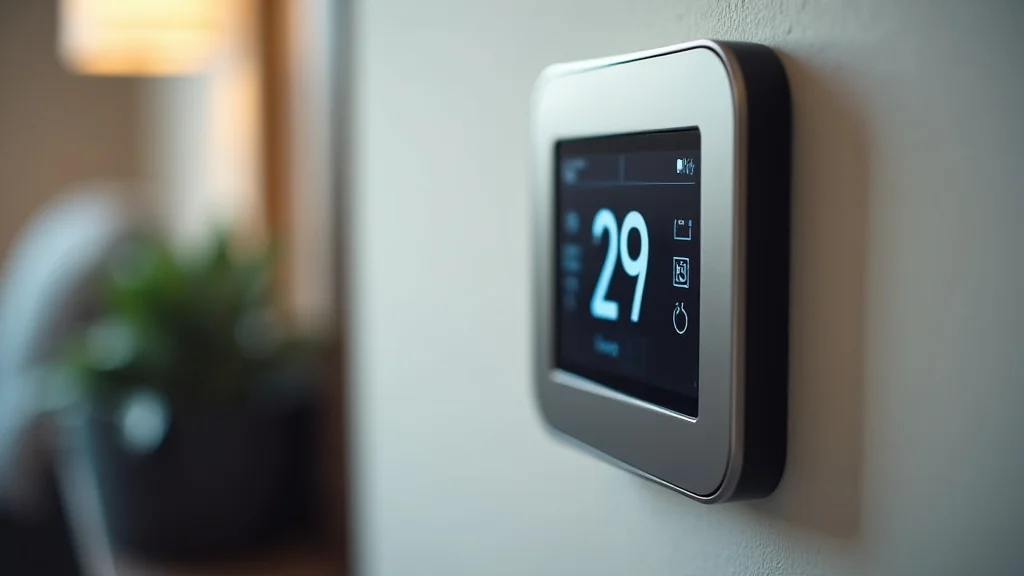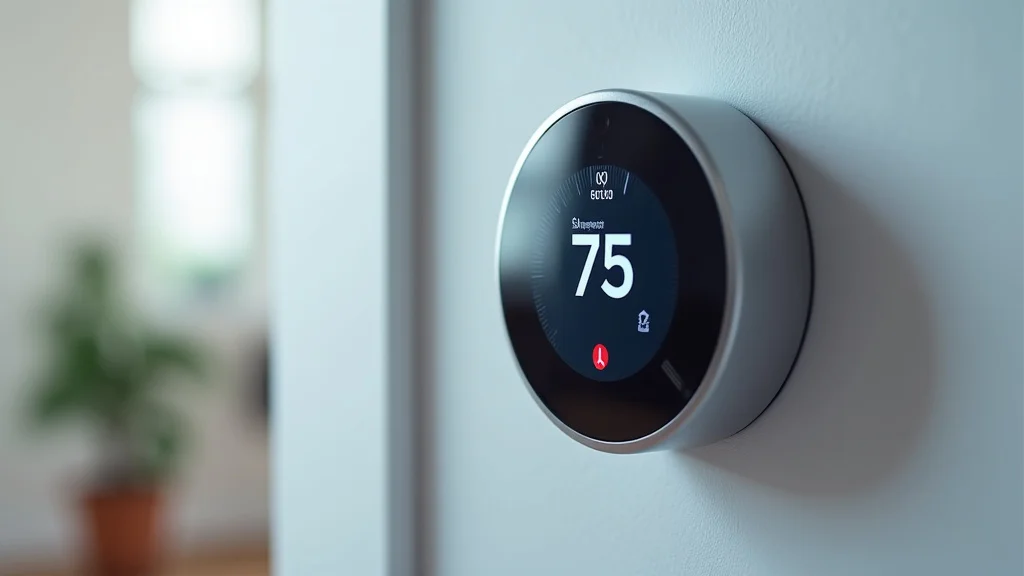
Picture this: It’s a freezing winter night, and you’re snuggled under a blanket, but the house is still chilly. You could get up and adjust the thermostat, but wouldn’t it be great if you could do it from your phone? That’s the power of a smart thermostat, and understanding how it works starts with exploring its inner workings. This guide will break down the essential components, showing you how these clever devices keep your home comfortable while helping you save money. You’ll gain a clear picture of the smart thermostat block diagram, empowering you to appreciate the technology behind your cozy home and better understand how to optimize your settings.
Key Takeaways
- Discover the core components of a smart thermostat and their functions.
- Explore how a smart thermostat gathers data and responds to user input.
- Learn how smart thermostats connect to the internet and communicate with other devices.
- Understand the importance of security and data privacy in smart thermostat design.
- Examine how smart thermostats help you control energy use and reduce costs.
- See how a smart thermostat block diagram illustrates these functions.
Core Components of a Smart Thermostat
A smart thermostat, at its heart, is a sophisticated device with various components working together to manage your home’s heating and cooling. It goes way beyond the simple dial of older models, incorporating advanced sensors, processors, and communication modules. These elements work in concert to monitor environmental conditions, learn your preferences, and adjust your home’s temperature accordingly. To grasp how a smart thermostat block diagram visually represents these components is crucial to full comprehension of the process.
The Central Processing Unit (CPU)
The CPU is the brain of the smart thermostat, managing all operations. It receives data from sensors, processes user input, and sends commands to the heating, ventilation, and air conditioning (HVAC) system. The power of the CPU determines the speed and efficiency of the thermostat’s functions, including its ability to learn your habits and adjust the temperature automatically. It’s the central hub coordinating every function and process within the device, ensuring everything operates seamlessly. Think of it as the conductor of an orchestra, directing each instrument to play in harmony.
- Data Processing: The CPU analyzes data received from various sensors, such as temperature, humidity, and occupancy.
- Decision-Making: Based on the data and programmed settings, the CPU decides what actions to take, like turning the heating or cooling on or off.
- Control Signals: The CPU sends electrical signals to the HVAC system to control the furnace, air conditioner, and other components.
The processing power also influences the features available, like advanced scheduling, energy-saving modes, and integration with other smart home devices. For example, a more capable CPU allows for more sophisticated algorithms to optimize energy consumption based on real-time data and historical usage. The CPU, along with the device’s software, is the cornerstone of its smart functionality, impacting its overall performance and user experience.
Sensors: The Thermostat’s Eyes and Ears
Sensors are critical for providing the real-time information the CPU needs to make informed decisions. These components measure temperature, humidity, and often detect occupancy to customize your home environment. The quality and accuracy of these sensors are essential for delivering precise temperature control and energy efficiency. Without good sensors, the thermostat wouldn’t be able to “see” and “hear” what’s happening in your home.
- Temperature Sensors: These sensors constantly monitor the air temperature in the room and relay this information to the CPU.
- Humidity Sensors: Some smart thermostats have humidity sensors, which help manage the indoor climate and prevent mold growth.
- Motion/Occupancy Sensors: These detect when the house is occupied, allowing the thermostat to conserve energy by adjusting the temperature when no one’s present.
The types of sensors and their placement significantly impact the thermostat’s performance. For example, a poorly located temperature sensor might read an inaccurate temperature, causing the thermostat to function incorrectly. Modern smart thermostats often use multiple sensors, and algorithms that can compensate for any inaccuracies. This is the difference between a thermostat that simply reads the temperature and one that learns your routines.
Communication Modules
Communication modules enable the smart thermostat to connect to the internet and interact with your smartphone or other smart home devices. They use Wi-Fi, Bluetooth, or other wireless protocols to send and receive data. This wireless connectivity is what allows you to control your thermostat remotely, monitor energy usage, and integrate it with other parts of your home automation system. These modules are the bridge, connecting the thermostat to the rest of the world.
- Wi-Fi: Most smart thermostats use Wi-Fi to connect to your home network, allowing for remote control and access to online features.
- Bluetooth: Bluetooth is often used for initial setup and pairing with your smartphone or other devices.
- Zigbee/Z-Wave: Some thermostats use these protocols to communicate with other smart home devices, allowing for advanced automation scenarios.
The choice of communication protocols affects the thermostat’s compatibility and features. Wi-Fi offers extensive range and bandwidth for remote access and data transfer. Protocols like Zigbee or Z-Wave, are beneficial for their low energy consumption and integration capabilities, are common in larger smart home setups. Selecting a thermostat with the right communication modules ensures it works seamlessly within your existing home automation ecosystem.
The Data Flow: How a Smart Thermostat Works
The data flow within a smart thermostat is a continuous loop, where the device collects information, makes decisions, and takes actions. This process involves multiple components working together in a specific sequence. From sensor readings to user commands, the thermostat processes everything to maintain a comfortable environment efficiently. The smart thermostat block diagram showcases the information’s journey within the system, making it easier to understand this complex process.
Gathering Data and User Input
The thermostat begins by collecting information from its built-in sensors, measuring temperature, humidity, and potentially detecting occupancy. Simultaneously, it gathers input from the user through the touchscreen, physical buttons, or a connected app on a smartphone. This dual flow of information is what enables the thermostat to understand both the current conditions of your home and your desired preferences. It’s the starting point for all subsequent actions.
- Sensor Readings: The thermostat’s sensors provide real-time data about the home environment.
- User Input: Users can adjust settings, create schedules, and select modes via the interface.
- Data Integration: The thermostat merges these two streams of information to create a comprehensive picture of the environment and the user’s needs.
For example, if the temperature sensor reads 70 degrees Fahrenheit and the user sets the thermostat to 72, the system compares the data and knows that it needs to turn on the heat. The system’s ability to seamlessly integrate data from all sources creates a personalized and responsive experience.
Processing and Decision-Making
The CPU is the central point for processing data and making decisions. It analyzes sensor readings and user input, comparing them to predefined rules and programmed schedules. Based on the analysis, the CPU decides what actions to take, such as turning on the furnace or air conditioner. This phase is where the thermostat’s intelligence comes to life, translating raw data into meaningful actions that affect your home environment.
- Data Analysis: The CPU examines sensor data, user input, and stored settings.
- Algorithm Application: The CPU applies algorithms to interpret the data, learning patterns, and optimizing energy use.
- Action Determination: The CPU determines the appropriate actions, such as adjusting the HVAC system settings or sending alerts.
This process is not static. Modern smart thermostats often use machine learning to adapt to your lifestyle and preferences. For instance, the thermostat can learn when you typically wake up and pre-heat the house, ensuring optimal comfort when you get out of bed. The decision-making process is a continual cycle of learning and optimization.
Control Signals and HVAC Interaction
Once the CPU makes a decision, it sends control signals to the HVAC system to implement the necessary changes. These signals are electrical commands that instruct the furnace, air conditioner, or heat pump to adjust its operation. The HVAC system then responds, either turning on or off, changing fan speeds, or modifying other settings to achieve the desired temperature. This direct communication is what allows the thermostat to influence your home’s climate.
- Signal Transmission: The CPU sends electrical signals to control the HVAC equipment.
- HVAC Response: The HVAC system adjusts its settings to align with the thermostat’s commands.
- Environmental Adjustment: The changes in the HVAC system affect the home environment, bringing the temperature closer to the desired setting.
For example, if the thermostat instructs the air conditioner to turn on, it sends a signal to the outdoor unit to start cooling. The interaction between the thermostat and the HVAC system is a two-way street; the thermostat sends commands, and the HVAC system responds by changing its operation to achieve the desired effect. This direct interaction is the core functionality.
Connectivity and Integration in Smart Thermostats
The ability of a smart thermostat to connect to the internet and integrate with other smart home devices enhances its functionality. Wi-Fi connectivity allows for remote control and over-the-air updates, ensuring your thermostat always has the latest features. Integration capabilities allow the thermostat to interact with other devices, like smart lighting, security systems, and voice assistants, creating a cohesive home automation ecosystem. The smart thermostat block diagram typically illustrates these connections through the communication modules.
Internet Connectivity and Remote Access
Wi-Fi enables you to access and manage your thermostat remotely using a smartphone app or web interface. This allows you to adjust the temperature, view energy usage data, and create schedules from anywhere. Internet connectivity also facilitates over-the-air software updates, ensuring you get new features, security patches, and performance improvements. You can have complete command of your home’s climate control, even when you’re far away.
- Remote Control: Manage your thermostat settings from your smartphone or computer.
- Data Monitoring: View energy usage reports and track historical trends.
- Over-the-Air Updates: Receive software updates automatically to improve functionality and security.
For example, if you’re on your way home from vacation and want the house to be warm when you arrive, you can use your smartphone to adjust the thermostat. Internet connectivity is essential for the remote control of all functionalities, from basic temperature adjustment to complex schedule customization.
Smart Home Integration
Integration with other smart home devices amplifies the utility of a smart thermostat. By connecting to devices like smart lights, security systems, and voice assistants, the thermostat can work as a central hub for home automation. For example, when you activate your “Away” mode through your security system, the thermostat can automatically adjust the temperature to save energy. The thermostat becomes an integral part of a connected home ecosystem.
- Compatibility: Smart thermostats integrate with platforms like Amazon Alexa, Google Assistant, and Apple HomeKit.
- Automation: Create custom rules and automation sequences based on events or schedules.
- Enhanced Control: Control your thermostat using voice commands or through a centralized smart home app.
Consider a scenario where your smart thermostat is integrated with your smart lighting system. When the sun sets, and your lights turn on, the thermostat can automatically adjust the temperature to a more comfortable evening setting. This automated integration creates convenience and optimizes energy efficiency.
Data Security and Privacy
Data security and user privacy are important considerations when using smart thermostats. These devices collect information about your home environment and energy usage, making it essential to protect this data. Manufacturers must implement security measures to safeguard against unauthorized access and potential data breaches. Understanding the security features of your smart thermostat can give you assurance about the safety of your personal information.
- Encryption: Smart thermostats encrypt data during transmission and storage to protect your information.
- Authentication: Secure authentication mechanisms, like passwords and multi-factor authentication, are used to verify user identities.
- Privacy Policies: Manufacturers should have transparent privacy policies that outline how your data is collected, used, and protected.
When selecting a smart thermostat, research the manufacturer’s security practices. Check for features like encryption and authentication, as well as the company’s privacy policy. You can set up strong passwords and regularly update the device’s software. These are straightforward steps to enhance your data security and protect your privacy.
Energy Efficiency and Cost Savings
Smart thermostats are designed to help you save money on your energy bills by optimizing your home’s heating and cooling. Features such as smart scheduling, geofencing, and energy usage reports give you control over your energy consumption. By using these tools, you can reduce waste and maintain a comfortable environment. The smart thermostat block diagram may also illustrate the features that help save on energy.
Smart Scheduling and Automated Adjustments
Smart scheduling allows you to create customized heating and cooling plans based on your daily routine. Set the thermostat to lower the temperature when you’re away and increase it before you return. These automatic adjustments reduce energy use when you don’t need it and ensure your home is comfortable when you are present. Setting the right schedule is the difference between an ordinary thermostat and a smart one.
- Programmable Schedules: Customize temperature settings for different times of the day or week.
- Learning Capabilities: Some thermostats “learn” your habits and automatically adjust your schedule.
- Energy Conservation: Avoid wasting energy by only heating or cooling your home when necessary.
For example, you could set your thermostat to lower the temperature while you are at work during the day and warm the house up an hour before you get home. This smart scheduling eliminates wasted energy and helps you enjoy greater comfort.
Geofencing and Adaptive Features
Geofencing uses your smartphone’s location to automatically adjust the thermostat when you leave or enter a specific area. When you’re away from home, the thermostat can switch to an energy-saving mode. When you approach, it can start preparing your home. This feature adds another layer of automation and helps to eliminate energy waste, providing you complete control.
- Location Tracking: The thermostat detects your phone’s location using geofencing.
- Automated Adjustments: The thermostat changes settings based on your location (e.g., away or at home).
- Energy Efficiency: Geofencing reduces energy consumption by ensuring your home is only heated or cooled when needed.
Imagine you often forget to adjust the thermostat when you leave the house. With geofencing, the thermostat can detect when you leave and automatically switch to an energy-saving mode, even if you forget to adjust it yourself. This functionality optimizes your energy use with zero effort.
Energy Usage Reporting and Insights
Smart thermostats provide detailed energy usage reports, giving you valuable insights into your consumption patterns. You can view historical data, track how much energy you’re using, and identify areas where you can make improvements. These reports provide the data needed to make informed choices. This data awareness is key to efficient energy management.
- Usage Tracking: Monitor your energy consumption over time.
- Cost Analysis: See how much you’re spending on heating and cooling.
- Personalized Recommendations: Receive suggestions for optimizing your thermostat settings.
For instance, you might see that your energy use spikes on weekends when you are at home more often. This understanding can help you adjust your schedule or temperature settings for greater savings. Energy usage reports help you take control of your consumption, putting you on the path to lower energy bills.
| Feature | Smart Thermostat | Standard Thermostat |
|---|---|---|
| Remote Control | Yes, via smartphone app | No |
| Smart Scheduling | Yes, customizable and adaptive | Limited, basic programming |
| Geofencing | Yes, automatic temperature adjustments based on location | No |
| Energy Reports | Yes, detailed usage tracking and insights | No |
Common Myths Debunked
Myth 1: Smart Thermostats Are Difficult to Install and Use
Many people believe that setting up and using a smart thermostat is complicated. The reality is that most smart thermostats are easy to install, often following simple wiring instructions, and the companion apps are intuitive to use. Smart thermostats are designed for convenience, with user-friendly interfaces and automated features.
Myth 2: Smart Thermostats Only Work in Large Homes
Some believe that smart thermostats are only effective in large homes with complex HVAC systems. The reality is that smart thermostats can bring considerable benefits to any size home. They help with energy savings through smart scheduling, even in smaller spaces, and offer comfort through temperature monitoring.
Myth 3: Smart Thermostats Drain Energy Because They Are Always Connected
There’s a concern that smart thermostats consume excessive energy just to stay connected. The reality is that smart thermostats are designed with energy efficiency in mind. While they require a small amount of electricity to function, they often use less energy than traditional thermostats, and the energy savings from their smart features far outweigh their power consumption.
Myth 4: Smart Thermostats Aren’t Secure and Can Be Hacked Easily
People worry about the security of smart thermostats, fearing hacking and data breaches. While no device is entirely risk-free, modern smart thermostats implement robust security measures, including data encryption and secure authentication methods. Users can take steps such as using strong passwords and updating the device’s software to minimize risks.
Myth 5: Smart Thermostats Are Not Worth the Cost
The up-front cost of smart thermostats can seem high to some. However, when you factor in the energy savings they provide, along with the convenience and comfort they offer, smart thermostats often pay for themselves over time. You will find that the convenience and features are well worth the investment.
Frequently Asked Questions
Question: How do smart thermostats connect to the internet?
Answer: Smart thermostats usually connect to the internet through Wi-Fi, allowing them to communicate with your smartphone, other smart home devices, and online services.
Question: Can I control my smart thermostat from my phone?
Answer: Yes, most smart thermostats come with a mobile app that allows you to control the temperature, create schedules, and monitor energy usage from anywhere.
Question: Are smart thermostats compatible with all HVAC systems?
Answer: Most smart thermostats are compatible with the majority of HVAC systems, but it’s important to check the compatibility information before you buy one.
Question: Do smart thermostats require professional installation?
Answer: Many smart thermostats can be installed easily by following the provided instructions, but some may require professional installation depending on your HVAC system.
Question: How much energy can a smart thermostat save?
Answer: The energy savings vary, but many users experience a reduction in energy bills. This varies based on your usage, habits, and home type.
Final Thoughts
The journey through the smart thermostat block diagram unveils how these devices blend advanced technology to bring comfort and efficiency to your home. From the CPU and sensors to the communication modules and HVAC interaction, each component plays a role in creating a smart and responsive system. With the ability to control your home’s climate remotely, optimize energy use, and integrate with other smart home devices, the smart thermostat offers significant convenience and cost-saving potential. By understanding the core functionality of smart thermostats, you can harness the benefits of this technology and elevate your home living experience. Now, you have the knowledge to select and optimize your smart thermostat for enhanced comfort and savings. Start experimenting with different settings, explore the features, and watch as your home becomes smarter and more energy-efficient.