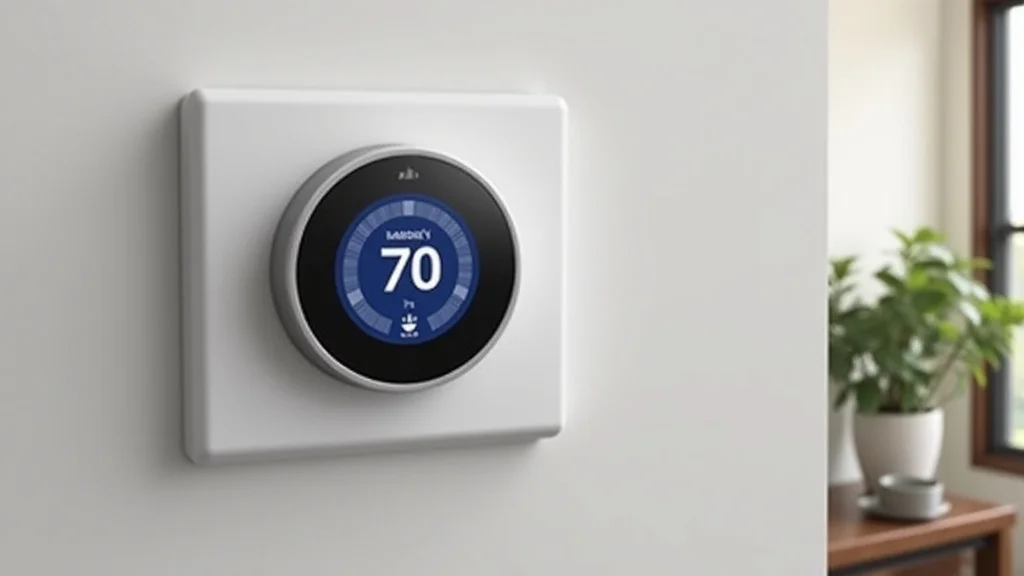
Remember that chilly morning when you woke up to a freezing house, wishing you’d turned the heating on earlier? Or the scorching afternoon where you came home to a stuffy, overheated living room? Frustrating, right? This guide explores the benefits of smart thermostats for home UK. You’ll learn how these clever devices can transform your home’s heating and cooling, offering you greater control, comfort, and potential savings. You will gain a thorough smart thermostats for home UK overview, allowing you to choose the best device for your needs.
Key Takeaways
- Smart thermostats enable you to control your home’s temperature remotely using a smartphone or tablet.
- These devices learn your heating and cooling preferences, creating a customized schedule to save energy.
- Smart thermostats can integrate with other smart home devices and services.
- Installation is straightforward and compatible with most heating systems in the UK.
- These devices offer significant energy savings and can reduce your carbon footprint.
- They provide detailed energy usage reports, helping you to monitor and optimize your consumption.
Controlling Your Climate with Smart Thermostats
Smart thermostats represent a significant leap forward in home comfort and energy efficiency. They allow homeowners to move beyond the traditional thermostat, offering a level of control and insight that wasn’t possible before. These devices don’t just regulate temperature; they learn your behavior, adapt to your needs, and help you conserve energy. This transformation in climate management offers numerous benefits, making homes in the UK more efficient and comfortable.
How Smart Thermostats Function
At their core, a smart thermostat operates similarly to a conventional thermostat but adds a layer of intelligence and connectivity. They use sensors to measure the ambient temperature and adjust the heating or cooling system accordingly. What sets them apart is their ability to connect to your home’s Wi-Fi network, allowing for remote control and data analysis. This connectivity unlocks a range of features, from setting schedules to monitoring energy usage. These devices interact directly with your boiler or heating system, intelligently responding to environmental changes and user preferences.
- Connectivity: The ability to connect to your home network, allowing remote control and integration with other smart home devices.
- Learning Capabilities: Algorithms that learn your habits and adjust the temperature automatically, optimizing for comfort and energy savings.
- Scheduling: The capability to set detailed heating and cooling schedules, allowing you to tailor the temperature to your lifestyle.
Connectivity is the cornerstone of a smart thermostat’s functionality. It allows you to adjust the temperature from anywhere using your smartphone, tablet, or computer. This feature is particularly useful if you are away from home or want to preheat your house before you arrive. This also enables the thermostat to receive software updates and integrate with other smart home systems, creating a cohesive and connected home environment.
Smart thermostats utilize algorithms to learn your heating and cooling preferences. They analyze your daily routines and adjust the temperature accordingly. For instance, if you usually wake up at 7 am, the thermostat will gradually increase the temperature before that time. This feature eliminates the need for manual adjustments and helps save energy by avoiding unnecessary heating or cooling when the home is unoccupied. The more it’s used, the better it becomes at anticipating your needs.
Scheduling is a key feature of smart thermostats. They allow you to create custom heating and cooling schedules based on your daily or weekly routines. You can set different temperatures for different times of the day or week. For example, you can lower the temperature when you are at work and increase it before you return home. This level of customization ensures that you have the desired comfort at the right time, minimizing energy waste.
Installation Process
Installing a smart thermostat in your UK home is often a straightforward process. Most devices are designed to
- Compatibility: Ensuring that the smart thermostat is compatible with your existing heating system, including boilers and radiators.
- Wiring: Connecting the thermostat to your heating system, typically involving disconnecting the old thermostat and connecting the wires to the new device.
- Configuration: Setting up the thermostat’s Wi-Fi connection and programming your preferred heating and cooling schedules.
Before purchasing a smart thermostat, ensure it is compatible with your heating system. Most devices are compatible with standard UK heating systems, including combi boilers, system boilers, and heat pumps. However, it’s essential to check the product specifications and consult the manufacturer’s website to confirm compatibility. Consider the type of wiring and the power requirements of the device. This compatibility check ensures that the thermostat can integrate seamlessly with your existing system, providing optimal performance.
The wiring process involves carefully disconnecting the wires from your old thermostat and connecting them to the new smart thermostat. The wiring configuration varies depending on the type of heating system. You will follow the wiring instructions provided by the manufacturer. If you’re unsure about this step, it’s best to consult an electrician to ensure that the installation is performed safely and correctly. This will prevent any potential damage to your heating system or the smart thermostat.
Once the physical installation is complete, you will need to configure your smart thermostat. This involves connecting the device to your home’s Wi-Fi network and setting up your heating and cooling schedules. The setup process typically involves using a smartphone app or a web-based interface. You can customize the temperature settings and program the thermostat to automatically adjust the temperature based on your daily routines. This customization allows you to optimize the thermostat for both comfort and energy efficiency.
Energy Efficiency and Cost Savings
One of the primary advantages of smart thermostats is their ability to improve energy efficiency, leading to lower energy bills and a reduced carbon footprint. By intelligently managing your heating and cooling, these devices prevent energy waste, making your home more environmentally friendly and cost-effective. These savings are achievable through their ability to optimize usage, learn from your behavior, and provide detailed insights into your energy consumption.
Energy-Saving Features
Smart thermostats incorporate various features designed to minimize energy consumption and reduce your utility bills. These features work in conjunction to provide optimal heating and cooling performance while maximizing savings. From learning your preferences to automatically adjusting the temperature when you are away from home, these features make it easier to conserve energy without sacrificing comfort.
- Geofencing: Using your location to automatically adjust the temperature when you leave or arrive at home.
- Usage Reports: Providing detailed insights into your energy consumption, allowing you to monitor and adjust your heating and cooling habits.
- Automatic Adjustments: Automatically adjusting the temperature based on factors such as weather conditions and occupancy.
Geofencing allows your smart thermostat to know when you’re away from home. When you leave, the thermostat can automatically lower the temperature, reducing energy consumption. As you approach home, the thermostat starts heating or cooling to ensure a comfortable environment upon your return. This feature eliminates the need to manually adjust the thermostat and helps to avoid wasting energy when your home is unoccupied. It’s especially useful for those with irregular schedules.
Smart thermostats provide detailed reports on your energy consumption, enabling you to see how much energy you use over time. These reports often show how your usage changes based on your schedule, weather conditions, and other factors. By analyzing these reports, you can identify areas where you can further reduce your energy consumption. It is important to compare your usage to previous months or years to assess the effectiveness of your smart thermostat and any adjustments you make.
Smart thermostats can use weather data to automatically adjust your heating and cooling. For instance, on a sunny day, the thermostat might reduce heating to take advantage of solar gain. Some models also detect occupancy using sensors and adjust the temperature to prevent heating or cooling empty rooms. This automation further improves energy efficiency by ensuring that the system only operates when and where it is needed.
Cost Savings in Practice
The energy-saving capabilities of smart thermostats translate directly into cost savings for homeowners. These savings can vary depending on factors such as the size of your home, your heating habits, and the features of your thermostat. However, many homeowners report a significant reduction in their energy bills after installing these devices. The more efficient your heating and cooling become, the more money you will save.
- Scenario 1: A homeowner with a regular work schedule who often forgets to turn down the heat. The smart thermostat automatically lowers the temperature during work hours, leading to noticeable savings.
- Scenario 2: A family who frequently travels. The smart thermostat uses geofencing to reduce heating when the house is empty, maximizing energy efficiency.
- Scenario 3: A homeowner with an old, inefficient heating system. The smart thermostat helps optimize usage, reducing energy consumption and associated costs.
Imagine a homeowner who has a consistent work schedule. Without a smart thermostat, they often forget to turn down the heat when they leave for work. A smart thermostat, on the other hand, can automatically lower the temperature during work hours, reducing energy consumption when no one is home. This automation leads to significant savings over time, as the heating system is not unnecessarily running. The savings can be even more substantial during the winter months.
Consider a family that frequently travels. A smart thermostat with geofencing capabilities is incredibly beneficial. The thermostat detects when the family leaves and automatically reduces heating while they are away. As they approach home, the thermostat preheats the house to ensure comfort upon their return. This feature prevents energy waste while providing the convenience of a comfortable home. These families can enjoy considerable cost savings over the year, particularly during extended trips.
Even if you have an older, less efficient heating system, a smart thermostat can still help you save money. By optimizing usage and preventing unnecessary heating or cooling, the thermostat can reduce energy consumption compared to a traditional thermostat. Although the energy savings may not be as significant as with a newer system, the smart thermostat will provide valuable insights into your energy usage. This will allow you to make informed decisions about your heating habits and potential system upgrades.
Integrating with Other Smart Home Systems
Smart thermostats are designed to seamlessly integrate with other smart home devices and services, allowing for a more cohesive and connected home environment. This integration enhances the functionality of the thermostat and provides greater convenience and control. These connections are particularly useful, making your home smarter and more responsive to your needs.
Compatibility and Connectivity
The ability of a smart thermostat to connect with other smart devices relies on compatibility and connectivity protocols. Most smart thermostats use Wi-Fi to connect to your home network, enabling them to communicate with other devices. The specific protocols supported by the thermostat will determine which other devices it can communicate with, ensuring a well-integrated smart home setup.
- Wi-Fi: Connecting to your home’s Wi-Fi network, enabling remote control and communication with other smart devices.
- Smart Home Platforms: Integration with platforms such as Amazon Alexa, Google Assistant, and Apple HomeKit, enabling voice control and automation.
- API Integration: Support for APIs (Application Programming Interfaces) allowing the thermostat to connect with various smart home services and devices.
Wi-Fi connectivity is essential for smart thermostats. It allows you to control your thermostat from anywhere using a smartphone, tablet, or computer. This connectivity also enables integration with other smart home devices that use the same network. This is important for receiving over-the-air updates, which enhance the functionality of the thermostat and allow access to new features. A strong Wi-Fi signal is important to ensure consistent and reliable performance.
Many smart thermostats are compatible with popular smart home platforms such as Amazon Alexa, Google Assistant, and Apple HomeKit. This integration allows you to control your thermostat using voice commands and create automated routines that work with other smart home devices. For example, you could set up a routine that automatically turns off the lights and lowers the temperature when you say, “Good night”. Compatibility with these platforms is also important for creating a unified smart home experience, where all your devices work together seamlessly.
API integration allows advanced users and developers to connect their smart thermostats to various smart home services and devices. This is important for custom integrations and advanced automation. It lets you create custom scripts and automation rules that extend the functionality of the thermostat beyond what the manufacturer intended. This enables greater personalization and more in-depth integration with other smart home systems. It also allows your smart thermostat to interact with third-party applications and services, increasing its versatility.
Real-World Applications
The integration of smart thermostats with other smart home systems opens up various possibilities for improving convenience, comfort, and energy efficiency. These applications highlight the benefits of a connected smart home, allowing you to create a home that adapts to your lifestyle.
- Voice Control: Using voice assistants to adjust the temperature, set schedules, and get energy usage reports.
- Automated Routines: Setting up automated routines that combine thermostat control with other smart home devices, such as turning on lights and locking doors.
- Integration with Smart Lighting: Automatically adjusting the temperature when smart lights are turned on or off in a room, optimizing comfort and energy use.
Voice control is one of the most convenient ways to interact with your smart thermostat. By integrating with voice assistants such as Amazon Alexa or Google Assistant, you can control your thermostat hands-free. You can adjust the temperature, change schedules, or ask for energy usage reports simply by speaking. This is particularly convenient when your hands are full or you’re in another room. Voice control adds a layer of convenience to your smart home experience.
Automated routines allow you to create customized actions that combine thermostat control with other smart home devices. You can set up a routine that, when activated, turns on the lights, locks the doors, and adjusts the temperature. This is useful for creating a “good night” routine that prepares your home for the evening or a “leaving home” routine that conserves energy. These routines enhance convenience and help to automate daily tasks, making your home more efficient.
Integrating your smart thermostat with smart lighting allows you to optimize comfort and energy use. For instance, when you turn on the lights in a room, the thermostat can automatically adjust the temperature to your preferred level. This is particularly helpful in rooms used frequently, such as the living room or kitchen. These integrations create a more responsive and intelligent home environment, enhancing convenience and comfort.
Common Myths Debunked
There are some misconceptions about smart thermostats that may prevent people from adopting this technology. Let’s debunk some common myths and clarify the facts about smart thermostats for home UK.
Myth 1: Smart Thermostats Are Difficult to Install
In reality, the installation process of a smart thermostat is usually straightforward and can be completed by most homeowners with basic DIY skills. The majority of smart thermostats are designed to
Myth 2: Smart Thermostats Are Expensive to Operate
The initial cost of a smart thermostat can seem high, but the potential energy savings often offset this cost over time. Smart thermostats are designed to optimize energy usage, and they often lead to significant reductions in heating and cooling bills. The more efficient your heating and cooling becomes, the more money you will save, making them cost-effective in the long run.
Myth 3: Smart Thermostats Are Only for Tech-Savvy People
Smart thermostats are designed for everyone, regardless of their technical proficiency. The user interfaces are intuitive and easy to use, often accessible through smartphone apps or web-based platforms. The learning algorithms automatically adjust to your preferences, eliminating the need for complex programming. These devices are accessible to a wide audience.
Myth 4: Smart Thermostats Are Not Secure
Security is a key consideration in the design of smart thermostats. Manufacturers implement security measures to protect your data and prevent unauthorized access. These measures include encryption, secure Wi-Fi connections, and regular software updates to address any vulnerabilities. You can also take steps to enhance the security of your home network.
Myth 5: Smart Thermostats Do Not Work Well with All Heating Systems
While some smart thermostats may have compatibility limitations, most are designed to work with a broad range of heating systems in the UK. Before purchasing a smart thermostat, it is essential to check its compatibility with your existing system, whether it is a combi boiler, system boiler, or heat pump. However, the majority of the popular smart thermostats are compatible with standard systems.
Frequently Asked Questions
Question: How much money can I actually save with a smart thermostat?
Answer: Savings vary based on usage, home size, and energy prices. However, many users report saving 10-20% on their energy bills.
Question: Can I control the smart thermostat remotely when I am away from home?
Answer: Yes, the primary advantage of a smart thermostat is the ability to control it remotely via a smartphone app or web interface.
Question: Is it difficult to install a smart thermostat myself?
Answer: Most smart thermostats are designed for easy installation and come with detailed instructions. You can typically replace your old thermostat yourself.
Question: Does a smart thermostat work with my boiler?
Answer: Most smart thermostats work with standard UK boilers, but it is important to confirm compatibility before purchasing.
Question: Are smart thermostats secure?
Answer: Yes, reputable smart thermostats use security measures like encryption to protect user data and prevent unauthorized access.
Final Thoughts
Smart thermostats for home UK offer a compelling blend of comfort, convenience, and efficiency. They provide the ability to control your home’s climate from anywhere, allowing you to optimize your heating and cooling settings. Their ability to learn from your behavior and adapt to your schedule can lead to substantial energy savings, reducing your bills and your environmental impact. Furthermore, their seamless integration with other smart home devices allows you to create a truly connected home experience. By exploring the features, you’ll gain the upper hand when looking to modernize your home’s heating system and create an energy efficient and comfortable environment. Consider taking the step toward creating a smarter, more efficient, and more comfortable home environment.