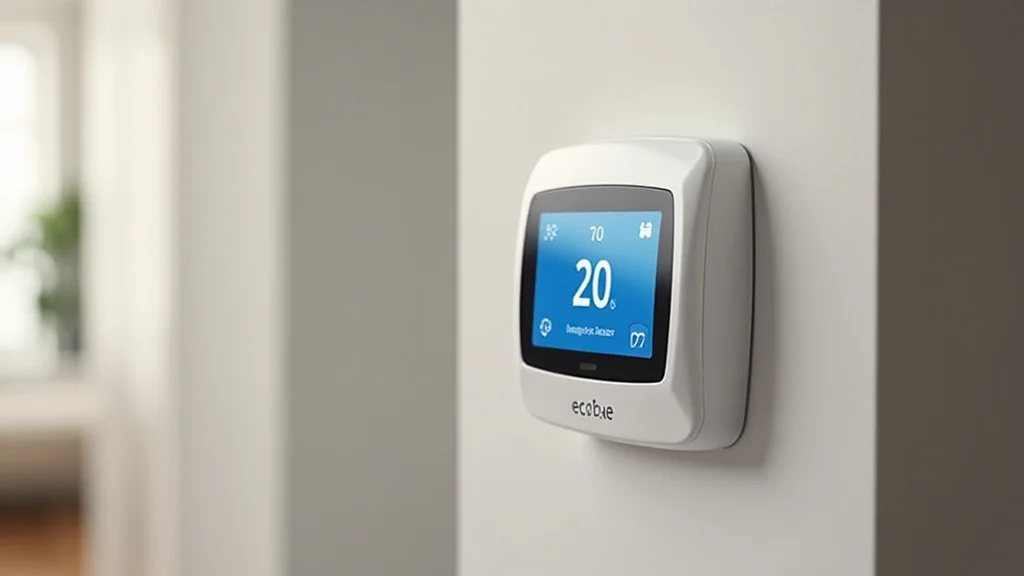
Remember that time you came home to a freezing house in the winter? Or maybe the sweltering heat of summer welcomed you after a long day? Frustrating, right? These temperature swings are a thing of the past thanks to the advancements of technology. This post will explore the smart thermostat sensor, the unsung hero that regulates your home’s temperature with precision. You’ll discover how these devices work, how they enhance your comfort, and how they can even help you save money. Get ready to gain a deep knowledge of how these devices can transform your home environment, improving your knowledge and ultimately, saving you money!
Key Takeaways
- Discover the core function of a smart thermostat sensor and its impact on home comfort.
- Explore how these sensors optimize energy use, leading to potential cost savings.
- Learn about the different types of sensors and their respective roles in a smart home system.
- Gain insight into the installation process and how to troubleshoot common issues.
- Examine the privacy and security considerations related to these devices.
- Understand how to choose the right smart thermostat sensor to suit your unique needs.
The Core Function of a Smart Thermostat Sensor
At the heart of any modern smart home heating and cooling system lies the smart thermostat sensor. But what exactly does it do? Essentially, the sensor’s job is to collect and transmit temperature data. Unlike older thermostats, which often rely on a single sensor, these modern systems incorporate multiple sensors placed strategically throughout your home. This gives a much more comprehensive and accurate picture of the temperature distribution in each room. The core function is to constantly measure the ambient temperature, relaying the data back to the thermostat, which then makes decisions about running the HVAC system. This is a critical component for maintaining consistent and comfortable conditions. Without this information, the thermostat would be unable to make informed decisions about your home’s climate.
How Sensors Collect Data
The collection of temperature data is a continuous process. These sensors use a variety of technologies to accurately measure ambient temperature. Typically, these sensors utilize thermistors, which are resistors whose resistance changes with temperature. As the temperature rises, the resistance of the thermistor changes in a predictable manner, allowing the system to calculate the exact temperature. This data is then transmitted, often wirelessly, to the central thermostat unit. Data is transmitted via a number of methods, including radio frequencies (RF) and Wi-Fi. The frequency that is used depends on the design, with the focus on reliable data transmission to provide consistent performance.
- Thermistors: These are the workhorses of temperature sensing. Their resistance changes with temperature, allowing for accurate measurement. The thermistor’s small size allows them to be placed inconspicuously throughout a home, with a focus on ease of placement.
- Wireless Communication: Sensors often use radio frequencies or Wi-Fi to communicate with the thermostat. This enables flexibility in placement and reduces the need for wires. This method allows for convenient setup and easy integration within an existing home setup.
- Data Transmission: The collected temperature data is transmitted in real time to the central control unit. This constant stream of information allows the system to make instantaneous decisions about your heating and cooling. This allows for rapid changes in response to room temperature.
Data Analysis and Action
The temperature data gathered by the smart thermostat sensor is just the beginning. The central thermostat unit takes this information and analyzes it to make adjustments to your HVAC system. Sophisticated algorithms use this real-time data to maintain the desired temperature. If a room is too warm, the system may start the air conditioner. If another room is too cold, the heating system can be triggered. These decisions are not only based on current temperature readings, but also on historical data and user preferences. This data allows the thermostat to be proactive and make adjustments before you even realize there’s a problem. All of this is done to minimize energy consumption while maintaining your comfort.
- Real-Time Adjustments: The system reacts immediately to changes in temperature. This constant feedback loop helps maintain consistent conditions. This constant monitoring of conditions provides consistency in the performance of the system.
- Algorithm-Based Control: The thermostat’s logic uses advanced algorithms to make intelligent decisions. These algorithms consider multiple factors, leading to greater efficiency. These algorithms can learn from previous data to provide optimal performance.
- User Preferences: You can set preferences for specific temperatures, schedules, and even areas of your home. This allows you to customize the system to match your lifestyle and needs. This customization allows for greater comfort and convenience.
Real-Life Example
Imagine a family with a two-story home. The bedrooms are upstairs, and the living areas are downstairs. Without a smart thermostat sensor, the upstairs might become unbearably hot in the summer while the downstairs remains comfortable. With a sensor system, the thermostat can detect the temperature difference between the floors. It will direct more cooling to the upstairs area. This will provide consistent temperatures throughout the house, enhancing comfort for everyone. This level of control makes the entire system more efficient.
Energy Efficiency and Cost Savings
One of the primary advantages of a smart thermostat sensor is its ability to optimize energy usage. Traditional thermostats offer a limited range of control. Smart systems, on the other hand, can learn your habits and adjust the temperature accordingly, avoiding unnecessary energy consumption. By only heating or cooling areas that are currently in use, the system reduces waste. They can be programmed to lower the temperature when you’re away from home. Also, they can pre-heat or pre-cool the house before you return. These actions can translate into significant reductions in your energy bills.
Intelligent Scheduling and Automation
The ability to create custom schedules is a significant feature that improves energy efficiency. You can program the thermostat to automatically lower the temperature while you are at work. Then, the system will adjust the temperature to your preferred level before you return home. Some systems have advanced automation capabilities. They can use geofencing, meaning the system knows when you are approaching your home and begins adjusting the temperature. These advanced features ensure that energy is only used when necessary, resulting in substantial savings over time. The ability to control the system remotely provides you with the power to manage your home’s climate from anywhere.
- Geofencing: This feature uses your smartphone’s location to control the thermostat. When you approach your home, the system automatically activates, pre-heating or cooling the house. This removes the need for manual adjustments and helps save energy.
- Occupancy Sensors: Some systems use sensors to detect if a room is occupied. If a room is empty for an extended period, the thermostat can automatically adjust the temperature. This helps save energy when an area is not in use.
- Learning Algorithms: Many thermostats use algorithms that learn from your temperature preferences and usage patterns. Over time, the system optimizes its behavior to match your habits. This provides maximum comfort while minimizing energy consumption.
Energy Consumption Monitoring
The best smart thermostat sensor systems provide detailed information about your energy usage. They typically track how much energy your HVAC system consumes over time. This data is often presented through intuitive charts and graphs. This allows you to understand the impact of your thermostat settings. This gives you insight into your heating and cooling costs. Being able to access and examine this data is a key aspect of maximizing energy savings. Knowing your consumption patterns helps you adjust your settings to be even more efficient.
- Usage Tracking: The system monitors energy consumption over time, giving you a clear picture of your usage. This allows you to identify areas where you can make improvements. This data helps you make more informed decisions about your energy usage.
- Historical Data: You can often view historical data, allowing you to identify trends and compare usage across different periods. This enables you to understand your energy consumption patterns, and it helps you optimize settings for maximum efficiency.
- Personalized Insights: Some systems provide personalized recommendations based on your usage data. These recommendations can include suggestions for saving energy. This will enable you to take steps to conserve energy and reduce costs.
Real-Life Case Study
A family in a cold climate installed a smart thermostat sensor. Before installation, their heating bills were high. They set up the thermostat to automatically lower the temperature at night and during the day when they were away. The system also learned their patterns. After six months, they saw a 20% reduction in their heating costs. The family was very pleased with the savings.
Different Types of Smart Thermostat Sensors
The market has a variety of smart thermostat sensor options, each offering unique features and benefits. The type of system that is right for you will depend on your specific needs and the size of your home. They range from simple, basic sensors to complex, multi-room systems. They are designed to work with various HVAC setups. Understanding these different types will help you select the optimal system. This is a crucial step towards creating a comfortable and energy-efficient home environment.
Standalone Sensors
Standalone sensors are simple, self-contained devices. They are designed to work with a compatible smart thermostat. They are usually placed in different rooms. These sensors measure the temperature and report it back to the main thermostat. This gives the system more data to make informed decisions about your home’s climate control. Standalone sensors are a great starting point, especially for those who want to enhance the accuracy of their temperature readings in a specific room. These sensors give you a high level of accuracy for managing your home’s climate.
- Placement Flexibility: These sensors can be placed anywhere in your home, providing flexibility in temperature monitoring. You can place them in areas of concern.
- Simple Installation: They are typically easy to set up. Most systems have wireless connectivity.
- Cost-Effective: Standalone sensors are usually cheaper than a complete system, making them a cost-effective option. This is an inexpensive way to get more accurate data.
Zoned Thermostat Systems
Zoned systems allow you to control the temperature in different areas of your home independently. This is a very efficient way to manage your HVAC system. A zoned system often works with dampers in your ductwork. The system will open or close these dampers to regulate airflow to different zones. The smart thermostat sensor will measure temperature in each zone. This system is a good fit for larger homes or those with multiple levels. These systems provide the highest degree of customization for home climate control.
- Independent Zone Control: You can set different temperatures for each zone in your home, which is efficient. This feature allows you to personalize comfort levels for each zone.
- Dampers and Airflow: These systems often use dampers to control airflow to different areas, which can be complex. This can result in increased energy efficiency by restricting airflow.
- Whole-Home Comfort: Zoned systems provide a high level of comfort for everyone in your home. This feature ensures that the correct temperature is provided to each area.
Multi-Room Systems
Multi-room systems are designed to manage temperature in multiple rooms at once. These systems typically use multiple sensors. The data is sent back to the main thermostat. The thermostat then uses this data to make adjustments to maintain the desired temperature. The main advantage of a multi-room system is that they can provide consistent temperature control throughout your home. This is accomplished by using a network of sensors working together to maintain the same comfort level in each room.
- Sensor Networks: These systems often involve a network of sensors working together to monitor temperature and send the data. They can maintain a consistent temperature through a sensor network.
- Centralized Control: The thermostat acts as the central control unit, managing all the data and making adjustments. They are easily controlled through a single interface.
- Advanced Features: Many multi-room systems offer advanced features, such as learning algorithms and smart schedules. The features enable the system to adapt and adjust to your home’s needs.
Installation and Troubleshooting
Installing a smart thermostat sensor is usually straightforward. However, proper installation is critical for the system to function correctly. This section will guide you through the process, providing insights on common issues. Correct setup ensures the sensor accurately reports temperature readings, contributing to the efficiency of your HVAC system. A well-installed system offers optimal control. It will help to guarantee long-term reliability and accurate performance, which maximizes your home comfort.
Installation Steps
The installation of a smart thermostat sensor varies depending on the specific model. But, here are some general steps that you can follow: Before starting, make sure you have everything you need. This includes the sensor itself, any required mounting hardware, and access to your home’s Wi-Fi network. Then you can begin by removing the old thermostat. Consult the manufacturer’s instructions for detailed instructions. Once the hardware installation is complete, you can begin the software setup.
- Power Off Your HVAC System: This is a crucial safety step before you do any electrical work. Turn off the breaker that controls your heating and cooling unit. This will protect you from potential electrical hazards.
- Remove the Old Thermostat: Carefully detach the old thermostat from the wall. Take a picture of the wiring to help you reconnect the wires to the new unit. This can be a lifesaver if you are not sure where the wires go.
- Wire the Smart Thermostat: Connect the wires from your HVAC system to the new smart thermostat. Match the wires to the corresponding terminals based on your photo. Make sure to consult the product’s wiring diagram if there are any questions.
- Mount and Connect the Sensor: Place the sensor in the desired location. Then mount the unit according to the manufacturer’s instructions. Connect it to your Wi-Fi network. Make sure your network is secure before you begin this step.
Troubleshooting Common Issues
Even with the best preparation, you might encounter issues during installation. Problems may occur. This can be frustrating. However, many of these issues are easy to fix. This section will provide some advice for quickly resolving common problems. The proper approach can help you prevent downtime and quickly restore your system’s functionality. This information is a great resource if you are having issues with your new system.
- Sensor Connectivity Issues: Make sure the sensor is within range of your Wi-Fi network. Sometimes the signal may not reach the sensor. If so, try moving the sensor closer to the router or using a Wi-Fi extender. Be sure to check that the Wi-Fi password is correct.
- Temperature Discrepancies: If the temperature readings appear inaccurate, recalibrate the sensor. Most systems have a calibration feature. This allows you to fine-tune the sensor’s readings. If this does not work, make sure the sensor is not exposed to direct sunlight or drafts.
- App Connectivity Problems: Ensure that your smartphone is connected to the same Wi-Fi network. If you are having issues, update the app to the newest version. Sometimes the issues can be resolved with a quick update. You can try restarting the app or your device.
- Power Supply Issues: Verify that your HVAC system has power. Check the circuit breaker to make sure it is switched on. If your thermostat uses batteries, check to make sure they are installed correctly.
Sample Scenario
- You install a smart thermostat sensor and the temperature reading is off.
- You check for proper placement and recalibrate the device using the app.
- You ensure there are no obstructions interfering with the sensor’s readings.
- The temperature is now accurate, providing consistent comfort.
Privacy and Security Considerations
With increasing reliance on smart home devices, privacy and security are important topics. The smart thermostat sensor is no exception. These devices collect data. They transmit and store it, which creates potential vulnerabilities. You should explore the privacy and security aspects before deciding on a smart home system. These precautions are essential for safeguarding your data and ensuring your peace of mind. Taking the time to understand these issues is a step towards a secure and protected smart home environment.
Data Collection and Usage
Smart thermostat sensors collect several types of data. This includes temperature readings, usage patterns, and sometimes, your location. This data is used to optimize the performance of the system. However, it can also be used for other purposes. This might include marketing. You should carefully review the privacy policy of the manufacturer before you install the system. You should understand how they use, store, and share your personal data. You should also understand what types of data are collected and how it is protected. A clear understanding will help you to decide if the product is right for you.
- Temperature Data: This is the primary data collected by the sensors, and is used to control the temperature in your home. This data is used by the algorithm to make decisions regarding heating and cooling.
- Usage Patterns: Smart thermostats track your heating and cooling habits. This includes the times of day you adjust the thermostat and your preferred temperature settings. This data helps the system learn and adapt to your preferences.
- Location Data: Some systems use location data to provide geofencing features. They will control your home’s climate based on your proximity to your home. This feature can be quite convenient.
Security Measures
To secure your data, manufacturers use a number of security measures. These measures include encryption, secure networks, and regular software updates. Encrypting data helps to prevent unauthorized access. Using secure networks helps protect the data during transmission. Regular updates help to address security vulnerabilities. You can also take action by securing your home Wi-Fi network. You can also change the default password on your router. Taking these steps is essential for maintaining your system’s safety and privacy. Implementing these measures adds extra layers of protection.
- Encryption: Data transmitted between the sensor and the thermostat should be encrypted. This protects your data as it moves.
- Secure Networks: Use a secure Wi-Fi network with a strong password. You should use a unique and robust password for your home network.
- Regular Updates: Keep your software and firmware up to date. Software updates often include security patches.
Protecting Your Privacy
Taking a few precautions will help to protect your privacy. You can start by reviewing the manufacturer’s privacy policy. You should understand how the company will use your data. Ensure your Wi-Fi network is secure. You can also consider using a separate network for your smart home devices. Another option is to limit the collection of your data. You can turn off any location-based services that you do not need. Taking the time to follow these tips will assist you in protecting your privacy. They also will help you feel safe about using these innovative devices.
Choosing the Right Smart Thermostat Sensor
Choosing the correct smart thermostat sensor is a decision. You should consider the unique factors of your home and your lifestyle. Factors such as home size, heating and cooling system type, and energy-saving goals should be considered. Understanding your needs will help you make a wise decision. By considering the factors described, you can select the product that will best enhance your comfort and efficiency. It will also help you save money on your energy bills.
Compatibility
The first step is to assess the compatibility with your existing HVAC system. Smart thermostats come in different varieties. They are designed to work with a range of systems. This can include furnaces, air conditioners, heat pumps, and others. Verify that the sensor is compatible with your specific system before you purchase. If you have an older system, you might need to hire a professional to assist you with installation. This will give you confidence that the new sensor will work.
- HVAC System Type: Confirm that the thermostat is compatible with your furnace, air conditioner, or heat pump.
- Wiring Compatibility: Check the thermostat’s wiring compatibility. Make sure it matches the wiring of your current system.
- Professional Installation: If you are not sure of the installation process, consider using professional help. This will provide a professional and ensure a correct installation.
Features to Consider
Consider the features that are most important to you. Some systems offer advanced features like geofencing. Others offer occupancy sensing. You should think about what would improve your comfort. Also, think about the energy-saving goals that you have. Evaluate the sensor’s remote access capabilities. Examine the ease of use of the mobile app. Consider the integration with other smart home devices. Selecting the features that are right for you will enable you to find a perfect fit for your home.
- Geofencing: This lets the thermostat adjust the temperature when you are approaching or leaving your home. It provides automatic climate control.
- Occupancy Sensing: These sensors detect whether a room is in use. They conserve energy by adjusting temperatures when a room is not occupied.
- Smart Home Integration: Make sure the thermostat works with your other smart home devices. Consider the integration capabilities of other devices.
- Energy Reporting: Choose a system that provides detailed energy usage reports. This allows you to monitor your energy consumption and make adjustments.
Budget and Brand
Budget and brand reputation are important. Smart thermostat sensor prices vary. They range from basic models to systems with advanced features. You should determine your budget before you shop. Take the time to consider the different brands. Then, examine their reputation for quality, reliability, and customer service. You should research reviews. Doing so will provide insight into the product and its performance. Weighing these factors will help you make a smart investment. You should select a sensor that fits your needs and your budget.
| Feature | Budget-Friendly Options | Premium Options |
|---|---|---|
| Price Range | $50 – $150 | $200 – $350+ |
| Features | Basic scheduling, Wi-Fi connectivity, basic app control. | Advanced scheduling, geofencing, occupancy sensing, smart home integration, advanced energy reporting. |
| Brand Reputation | Well-known brands with value-driven products. | Brands known for innovation, design, and exceptional customer service. |
Common Myths Debunked
Myth 1: Smart Thermostats Are Difficult to Install
In reality, many smart thermostats are designed for easy installation, with step-by-step instructions. Most come with clear instructions. Many brands also offer online videos to guide you through the process. Installation often involves removing your old thermostat and connecting the wires. It’s often as simple as connecting your old thermostat wires to the new one. If you have any questions, you can always seek professional assistance.
Myth 2: Smart Thermostats Aren’t Safe from Hackers
While any connected device carries a risk, smart thermostats implement robust security measures to protect against unauthorized access. They use encryption, secure Wi-Fi connections, and regular software updates. Manufacturers are committed to improving security. They are constantly releasing updates to fix vulnerabilities. Moreover, you can improve security by using strong passwords and securing your home network.
Myth 3: Smart Thermostats Only Benefit Large Homes
Smart thermostats provide comfort and savings to homes of all sizes. Even in smaller spaces, smart thermostats can provide energy savings by optimizing schedules and automatically adjusting temperatures. They can also offer multi-room climate control through the use of sensors. Small homes will also benefit from the automated schedules and temperature control. You can save money regardless of the size of your home.
Myth 4: Smart Thermostats Are Not Energy Efficient
Contrary to this myth, smart thermostats are designed to boost energy efficiency. Their learning capabilities and automated features enable them to adjust your home’s temperature based on your behaviors. They can learn your patterns. Then, they will reduce energy use during periods of inactivity. Many users have seen considerable energy savings. Smart thermostats work by making sure that your HVAC system operates efficiently.
Myth 5: Smart Thermostats Are Too Expensive
While the initial cost of a smart thermostat can be higher than a traditional one, the long-term savings often make up for the expense. With reduced energy bills, many users have found that they recoup the cost of the device over time. In addition, rebates and incentives can sometimes make smart thermostats even more affordable. When weighing the initial cost, consider the money that you will save.
Frequently Asked Questions
Question: How do smart thermostat sensors differ from regular thermostats?
Answer: Smart thermostats use advanced technology, including Wi-Fi connectivity, to offer features like remote access, automated scheduling, and learning capabilities. Regular thermostats offer basic temperature control.
Question: Can I control my smart thermostat from my phone?
Answer: Yes, most smart thermostats come with a mobile app that allows you to monitor and control your system from anywhere.
Question: Do I need to be tech-savvy to use a smart thermostat?
Answer: Not at all! Smart thermostats are user-friendly. Most systems are designed to be easy to set up and use.
Question: How much money can I save with a smart thermostat?
Answer: Savings vary. However, many users report saving 10-20% on their energy bills by optimizing their heating and cooling.
Question: What happens if my Wi-Fi goes down?
Answer: Your smart thermostat will continue to operate based on the last settings, which allows it to maintain its basic functions. You will not have remote access until your internet returns.
Final Thoughts
The smart thermostat sensor is a clever component for modern home climate control. These sensors are a step forward from standard thermostats. They provide precision and convenience. They boost energy efficiency and give greater control over your home’s climate. From the simple functionality of basic standalone sensors to the advanced capabilities of zoned and multi-room systems, there is a smart solution. Also, you can pick the right one to fit your needs. Remember to consider your home’s unique characteristics. Examine your comfort goals. Also, keep the long-term benefits in mind. Now is the perfect time to explore upgrading your home’s climate control system. Start to experience the efficiency, comfort, and savings that these cutting-edge devices offer. Embrace the chance to transform your home into a more comfortable, energy-efficient space. Enjoy the benefits of a smarter home today!