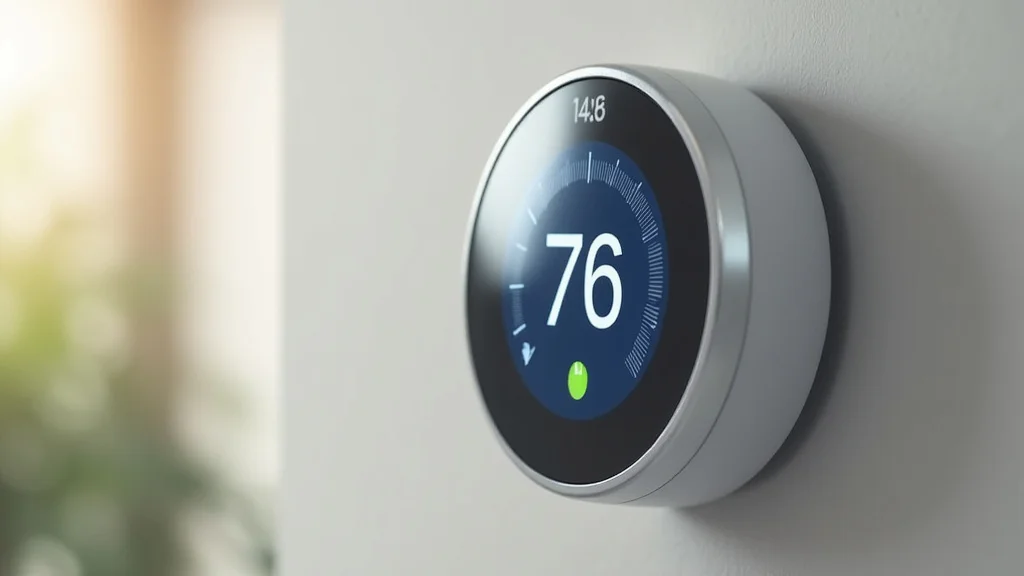
Remember that chilly morning when you woke up to a freezing house, even though you swore you set the thermostat? Or maybe you’ve walked into a scorching home after a long day at work? These situations could be a thing of the past with a smart thermostat. These clever devices learn your schedule, adjust the temperature automatically, and can even be controlled remotely. This article will help you understand how smart thermostats work, demystifying their technology and showing you how they can save you energy and money while keeping your home comfortable. You’ll gain valuable knowledge that will help you select the right thermostat for your needs, increasing your home’s efficiency and your own peace of mind.
Key Takeaways
- Smart thermostats use sensors and algorithms to learn your heating and cooling preferences.
- These devices connect to your home’s Wi-Fi, allowing remote control through a smartphone app.
- Smart thermostats can integrate with other smart home devices and voice assistants.
- They offer features like energy usage tracking and geofencing to optimize energy consumption.
- Smart thermostats can automatically adjust temperatures to reduce energy waste when you are away.
- They provide personalized comfort while often helping to lower your utility bills.
How Smart Thermostats Work: An Overview
At their core, smart thermostats are sophisticated temperature control devices that go beyond the capabilities of traditional thermostats. They seamlessly blend technology and home comfort by leveraging sensors, connectivity, and intelligent algorithms. Unlike the simple on-off functionality of older models, smart thermostats continually monitor the environment, learn from user behavior, and adapt to changing conditions. This makes these tools an excellent addition to your smart home. They bring convenience and efficiency to controlling your home’s climate.
Sensors and Data Collection
The foundation of a smart thermostat’s operation lies in its array of sensors. These sensors are constantly collecting data about your home’s environment, providing the necessary information for the thermostat’s functions. These readings are the thermostat’s primary method for evaluating your needs and then adjusting settings. The more data they get, the better they perform and more efficient your home’s climate becomes. This approach contributes to improved energy savings and overall climate control.
- Temperature Sensors: These are the most fundamental sensors, measuring the current temperature inside your home. They provide the basic data that the thermostat uses to determine when to turn the heating or cooling system on or off. Precise temperature readings are key to maintaining a comfortable climate.
- Humidity Sensors: Many smart thermostats include humidity sensors. These sensors provide insights into the moisture levels in the air, which can affect how warm or cool you feel. This information allows the thermostat to make more nuanced adjustments, optimizing comfort levels.
- Proximity Sensors: Some advanced models have proximity sensors. These sensors detect when you are approaching or leaving your home. This feature helps the thermostat to automatically adjust the temperature to conserve energy when the house is empty.
- Motion Detectors: Similar to proximity sensors, motion detectors may be present in smart thermostats. They observe activity within the house. If motion isn’t detected for a specific period, the thermostat may adjust the temperature to save power.
Learning and Adaptive Algorithms
The true intelligence of a smart thermostat comes from its learning capabilities. Using advanced algorithms, the thermostat gathers data from its sensors, as well as input from you, to understand your heating and cooling preferences. It takes time for the algorithms to learn your routine, but the longer it operates, the more accurately it can predict your needs. This results in optimal comfort and energy savings.
- Schedule Learning: The smart thermostat learns your daily and weekly routines. It identifies times when you are typically home and when you are away. This allows it to create a personalized schedule to optimize comfort while minimizing energy waste.
- Preference Tracking: The thermostat learns your preferred temperature settings. If you adjust the temperature, it remembers those changes and adapts its behavior accordingly. This ensures the climate control is always aligned with your preferences.
- Energy Saving Modes: Smart thermostats offer energy-saving modes. These modes can automatically adjust the temperature when the house is empty or during periods of low occupancy. This helps to minimize energy use when heating or cooling is not needed.
- Weather Integration: Many thermostats connect to weather services. They monitor outdoor temperatures and humidity. This lets the thermostat adjust the indoor climate. For instance, it can preheat the home on a cold morning.
Connectivity and Remote Control
A major advantage of a smart thermostat is its ability to connect to your home’s Wi-Fi network. This connectivity unlocks a range of features, including remote control, usage monitoring, and integration with other smart home devices. It gives you the power to monitor and manage your home’s climate from nearly any location. It also opens up avenues for automation and integration that add convenience to your daily routine.
Wi-Fi Integration and App Control
The integration of Wi-Fi is crucial for smart thermostats. It gives users complete control over their home’s climate. With an easy-to-use mobile app, you can adjust the temperature, view energy usage, and even create custom schedules. It allows you to tailor your home’s climate to your needs and preferences, wherever you are.
- Smartphone App: The mobile app is the central hub for managing your smart thermostat. You can download the app to your smartphone or tablet. The app provides a user-friendly interface. It allows you to adjust the temperature, view energy usage, and set schedules.
- Remote Access: The remote access feature is a key benefit of a smart thermostat. You can control your home’s climate from any location with an internet connection. This is convenient for making changes on the go. This can save money if you change your schedule.
- Notifications and Alerts: The app sends notifications and alerts about your home’s climate. You receive alerts regarding extreme temperatures or system issues. These notifications help you stay informed and take action quickly.
- User-Friendly Interface: Smart thermostat apps are generally designed with user experience in mind. The interface is intuitive, and the controls are easy to understand. Setting up and using the app should be simple.
Integration with Smart Home Systems
Smart thermostats are often designed to work with other smart home devices. They can integrate with voice assistants, such as Amazon Alexa, Google Assistant, or Apple HomeKit. This integration allows you to control your thermostat with voice commands. It also lets you create automated routines. This integration creates a complete and connected home environment.
- Voice Assistant Control: Integration with voice assistants offers hands-free control. You can adjust the temperature or view the current settings with simple voice commands. This adds convenience to your daily routine.
- Smart Home Ecosystems: Many smart thermostats work with popular smart home platforms. This enables you to combine your thermostat with other smart devices, like smart lighting or security systems.
- Automated Routines: You can set up automated routines. You might create a “Goodnight” routine that lowers the thermostat, turns off the lights, and locks the doors. These routines simplify your tasks and improve home management.
- Compatibility: It’s important to make sure the smart thermostat is compatible with your other smart home devices. Check the product specifications to confirm its compatibility. This ensures you can integrate the thermostat into your existing system.
Energy Efficiency and Cost Savings
One of the primary advantages of smart thermostats is their potential for improving energy efficiency and reducing your utility costs. By learning your preferences, adapting to your schedule, and offering advanced features, these devices can help you use energy more smartly. This not only reduces your environmental impact, but also puts money back into your wallet.
Geofencing and Energy Usage Tracking
Geofencing and energy usage tracking are two of the key features that contribute to the energy-saving capabilities of a smart thermostat. Geofencing allows the thermostat to detect your location and adjust the temperature based on your proximity to your home. Energy usage tracking gives you insights into how your thermostat consumes energy.
- Geofencing: Geofencing uses your smartphone’s location to determine when you are approaching or leaving your home. The thermostat can automatically adjust the temperature to conserve energy. It can preheat the home before your arrival.
- Energy Reports: Smart thermostats provide detailed energy reports. These reports show your energy usage patterns. They can highlight the times of day or days of the week when you are using the most energy.
- Personalized Recommendations: Based on your usage data, your smart thermostat may offer personalized recommendations. These could include suggestions on how to modify your schedule to save energy.
- Utility Bill Integration: Some thermostats connect with your utility provider. This lets you see your energy usage in relation to your utility bill. You can compare different time periods to track your savings.
Smart Schedules and Automatic Adjustments
The ability of smart thermostats to learn your schedule and automatically adjust the temperature is a major factor in their energy-saving potential. By creating a smart schedule, you can ensure that your home is heated or cooled only when needed. This significantly reduces wasted energy when you are away or asleep.
- Programmable Schedules: You can create custom schedules for different days of the week. This allows the thermostat to adapt to your specific routine. It can adjust the temperature accordingly.
- Automatic Adjustments: The smart thermostat adjusts the temperature automatically. It uses its sensors and algorithms to determine when and how much to adjust the temperature.
- Away Mode: Away mode is a feature that allows the thermostat to conserve energy. This can be enabled when you are away. The thermostat will automatically adjust the temperature to a more energy-efficient setting.
- Holiday Settings: Many thermostats offer holiday settings. You can set the thermostat to a special energy-saving mode when you are on vacation. This helps to reduce your energy costs.
According to the U.S. Department of Energy, homeowners can save about 10% on their heating and cooling bills by using a smart thermostat.
| Feature | Description | Benefit |
|---|---|---|
| Geofencing | Uses location to adjust temperature. | Saves energy when you’re away. |
| Smart Schedules | Learns and adapts to your routine. | Reduces energy waste when you’re asleep or out. |
| Energy Reports | Provides usage data and insights. | Helps you understand and improve energy consumption. |
Choosing the Right Smart Thermostat
Selecting a smart thermostat that meets your requirements involves thinking about several factors, including compatibility, features, and ease of use. It’s important to choose a thermostat that not only matches your heating and cooling system, but also aligns with your lifestyle and preferences. Before choosing, do some research. This will ensure you can maximize the benefits of this technology.
Compatibility and Installation
Before purchasing a smart thermostat, make sure it is compatible with your existing heating and cooling system. Most smart thermostats work with common HVAC systems, but it’s important to confirm this before you buy. If you are not comfortable installing the thermostat yourself, consider professional installation for a smooth process.
- System Compatibility: Many smart thermostats work with gas furnaces, heat pumps, and air conditioners. Be sure to find a model compatible with your specific system. Check the product specifications for details on compatible systems.
- Wiring Requirements: Look at your existing thermostat wiring. The new smart thermostat might need a C-wire (common wire) for power. If you don’t have one, you may need to install it.
- Professional Installation: If you’re not confident in your ability to install the thermostat, consider professional installation. This can ensure proper functionality and prevent damage to your equipment.
- DIY Installation: If you decide to install it yourself, follow the manufacturer’s instructions carefully. Many models offer step-by-step guides. They also provide videos to assist you through the process.
Features and Functionality
Different smart thermostats have different features. Consider what’s important to you. Do you want geofencing? Voice control? Make sure your chosen model provides the functionality you need to achieve your comfort goals. Consider things like monitoring and extra features. Your comfort level is important.
- Geofencing: This feature uses your smartphone’s location to adjust the temperature automatically. It conserves energy when you are away.
- Voice Control: Integration with voice assistants lets you control the thermostat with voice commands. This adds convenience to your routine.
- Multi-Zone Control: If you have multiple zones, consider a thermostat that allows you to control each zone separately. This gives you greater control over your climate.
- Energy Reporting: Look for a thermostat that provides detailed energy reports. You can track your energy usage and identify areas for improvement.
Consider the learning capabilities and whether they suit your schedule. For example, if you work from home, a thermostat that learns may not be as helpful as one with a consistent schedule.
Ease of Use and User Experience
The interface of a smart thermostat is another critical factor. A user-friendly and intuitive interface will make it easier to manage your climate control. It’s also an important consideration for your daily experience. You can ensure that your experience is as easy as possible by understanding the thermostat’s features.
- User Interface: The user interface should be easy to navigate. The controls should be simple and intuitive. This makes it easy to adjust settings and monitor energy usage.
- Mobile App: The mobile app should offer a smooth and responsive experience. Check to see if it is easy to control the thermostat. Make sure it provides all the features and data you need.
- Display Screen: A clear and easy-to-read display screen is important. The display should show the current temperature, set temperature, and other relevant information.
- Customer Support: Good customer support is important, particularly if you’re new to the technology. Make sure the manufacturer offers responsive support to help you with issues.
Common Myths Debunked
Myth 1: Smart Thermostats Are Difficult to Install
In reality, many smart thermostats are designed for easy, do-it-yourself installation. They typically come with clear instructions and helpful guides. Many companies also offer online tutorials. Although professional installation is an option, many homeowners can easily install the device themselves with a screwdriver and a little patience. Consider your comfort level before deciding. If you are not comfortable working with electronics, a professional is a good choice.
Myth 2: Smart Thermostats Are Only for Tech-Savvy People
The truth is that smart thermostats are designed with user-friendliness in mind. The mobile apps have easy interfaces. Voice control and automated schedules simplify management. Even people with minimal technical skills can quickly learn how to use and enjoy the benefits of a smart thermostat. This makes smart thermostats accessible for everyone.
Myth 3: Smart Thermostats Only Save Money in the Winter
Smart thermostats can help save money year-round. They optimize heating in the winter and cooling in the summer. During the warmer months, smart thermostats can adjust temperatures when you’re away. They can reduce energy use. These thermostats contribute to year-round savings. That is a great benefit.
Myth 4: Smart Thermostats Are Always Connected and Vulnerable to Hackers
While smart thermostats are connected to the internet, manufacturers take security seriously. They use encryption and security protocols to protect user data and prevent unauthorized access. You can also take steps to further secure your home network. Using a strong password for your Wi-Fi will help to protect your system.
Myth 5: Smart Thermostats Are Expensive and Not Worth the Investment
Although the initial cost of a smart thermostat can be higher than a traditional one, the energy savings and convenience features quickly make up for the expense. Over time, the energy savings can lead to a significant return on investment. Many utility companies offer rebates. These rebates can help lower the initial cost. Smart thermostats offer long-term value.
Frequently Asked Questions
Question: How do smart thermostats learn my preferences?
Answer: They use sensors to collect temperature data and learn your behavior patterns, creating a schedule to optimize your home’s climate control.
Question: What’s the main benefit of using a smart thermostat?
Answer: It helps you save money on your energy bills by automatically adjusting the temperature.
Question: Can I control a smart thermostat from anywhere?
Answer: Yes, you can control it remotely via a smartphone app when connected to the internet.
Question: Do I need a professional to install a smart thermostat?
Answer: No, many models offer DIY installation, but professional installation is an option for optimal set up.
Question: Can smart thermostats integrate with other smart home devices?
Answer: Yes, they often integrate with voice assistants and other smart home platforms for better control.
Final Thoughts
Smart thermostats represent a big step forward in the control of home comfort. They go beyond simple temperature regulation by integrating technology to offer convenience, energy savings, and personalized comfort. The smart thermostat uses sensors, learning algorithms, and connectivity features like Wi-Fi and app control. These functions will allow you to control your home’s climate from nearly anywhere. These thermostats are also designed to be integrated with other smart home devices, which offers even more automation capabilities. They can help you improve energy efficiency and reduce utility costs by adjusting the temperature based on your schedule and preferences. Consider your needs before choosing. You’ll gain long-term value. Embrace the opportunities presented by this technology. You will enjoy a more comfortable, efficient, and convenient living space.